
Gelshield 200 is a two-pack epoxy primer used to protect the hull against the risk of osmosis (water blisters in the laminate). The aim is to reach sufficient dry film thickness.
Gelshield 200 is applied to create a thick, complete epoxy barrier on the hull surface. The technical data sheet clearly states the number of coats and the total dry film.
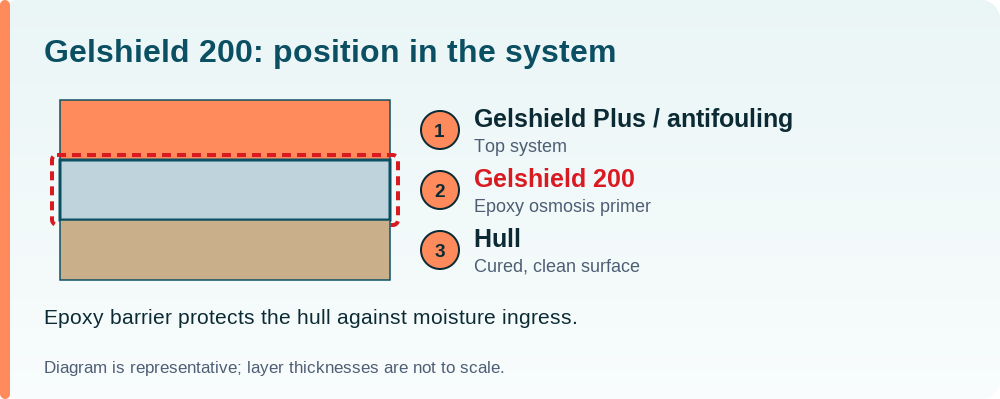
What does Gelshield 200 do and where does it sit in the paint system?#
Gelshield 200 forms an epoxy barrier to protect the hull against moisture penetration. Thickness is the basis of protection performance.
Which surfaces and where is it used?#
- Hull surfaces needing osmosis protection
- Barrier before Gelshield Plus or antifouling
- Complete epoxy barrier in renewal work
Surface preparation: the stage that decides the outcome#
Surface must be clean, dry and grease-free. The surface must be suitably prepared before application.
Mix ratio, induction and pot life#
Base and hardener (YPA214) are mixed at 3 : 1 by volume. YTA061 (No.7) is used for thinning; the ratio is not specified in the technical data sheet.
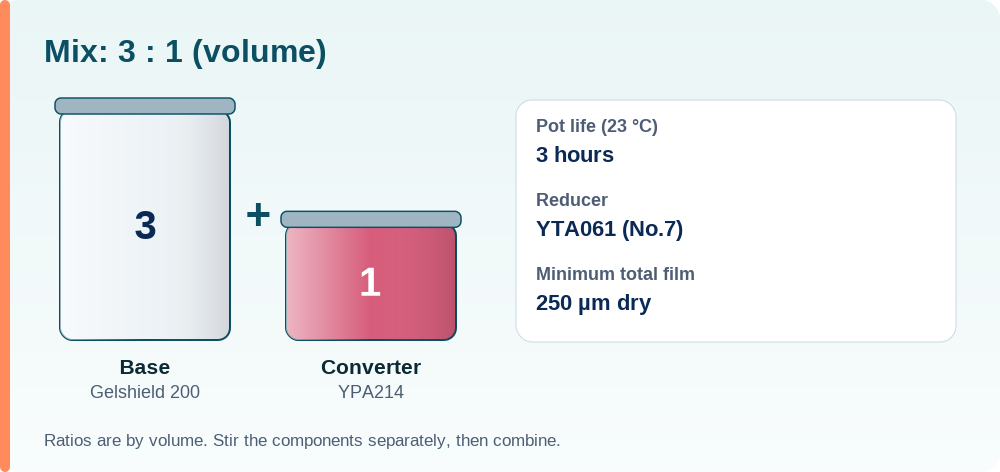
| Value | Value |
|---|---|
| Mix | 3 : 1 (volume) |
| Converter | YPA214 |
| Reducer | YTA061 (No.7) |
| Pot life (23 °C) | 3 hours |
Application: step by step#
Applied by brush or roller in at least 5 coats. A dry film of 50 µm and a wet film of 111 µm per coat are targeted. Total dry film must be at least 250 µm.
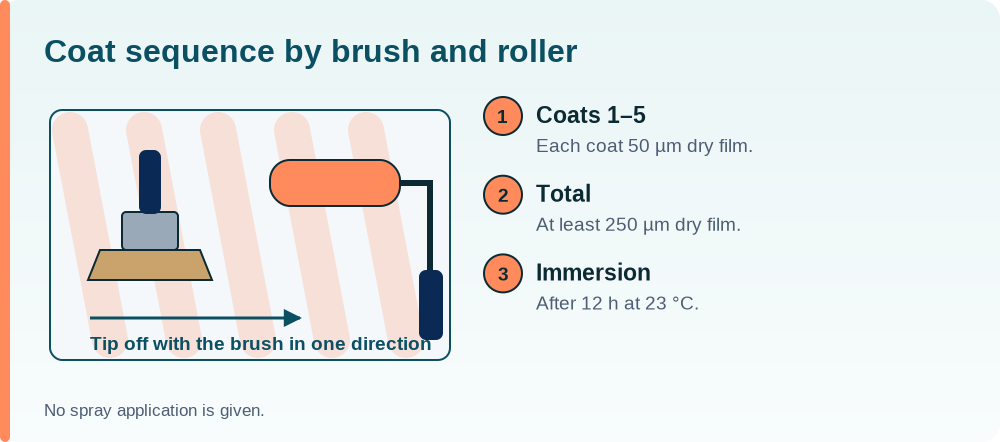
- Mix
3 : 1 by volume.
- First coat
By brush or roller.
- Number of coats
At least 5 coats.
- Total film
At least 250 µm dry.
- Immersion
After 12 hours at 23 °C.
| Parameter | Value |
|---|---|
| Number of coats | At least 5 |
| Dry film / coat | 50 µm |
| Wet film / coat | 111 µm |
| Total dry film | At least 250 µm |
Drying and recoat times#
Gelshield 200 is touch-dry in 1.5 hours at 23 °C and can be immersed in 12 hours. A recoat window of 3 hours to 6 months is given.
| Stage (23 °C) | Time |
|---|---|
| Touch dry | 1.5 hours |
| Immersion | 12 hours |
| Recoat (min) | 3 hours |
| Recoat (max) | 6 months |
Application conditions: temperature, humidity and dew point#
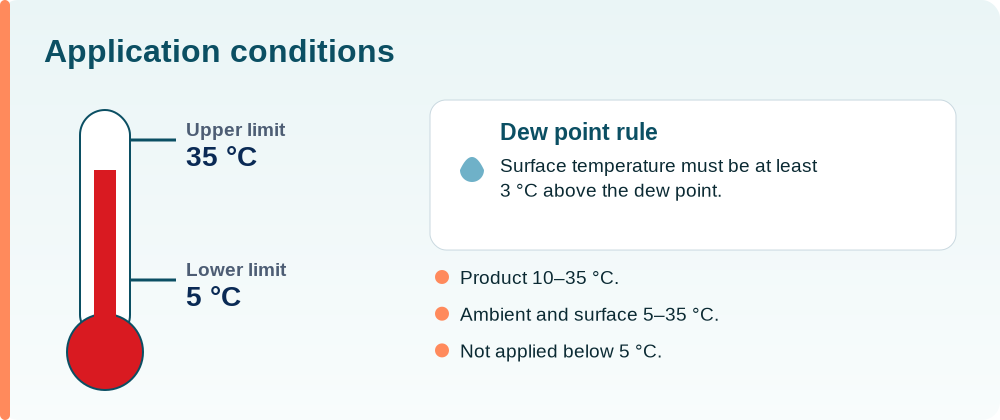
Product applied at 10–35 °C; ambient and surface at 5–35 °C.
Tips from the professionals#
- Build total dry film to 250 µm.
- Plan pot life according to temperature.
- Cure the new hull for 4 weeks.
- Do not apply over single-pack paint.
Common mistakes#
- 3 : 1 volume mix
- At least 250 µm total dry film
- Cured new hull
- Suitable temperature range
- Application below 5 °C
- Direct application on bare laminate
- Application over single-pack paint
- Insufficient coats
Health and safety#
Frequently asked questions#
What is the Gelshield 200 mix ratio?
3 : 1 by volume.
How many coats of Gelshield 200?
At least 5 coats (brush), total at least 250 µm dry film.
Which thinner is used with Gelshield 200?
YTA061 (No.7).
How long is Gelshield 200 immersed?
12 hours at 23 °C.
_Source: International Yacht Paint (AkzoNobel) product technical data sheet (TDS) and product page (Gelshield 200 PDS). The values on this page are compiled from the manufacturer's published documents and may change as the product develops. Before application, always check the product label, the current technical data sheet (TDS) and the safety data sheet (SDS)._