
Summary: Micron ReGen at a glance#
On 17 November 2026, at the Metstrade fair in Amsterdam, International presented Micron ReGen, the newest member of the Micron range. The product’s claim is a third route beside the two approaches we know in underwater protection: instead of releasing biocide or wearing the paint away, it continuously renews the properties of the surface in contact with the water. This article covers the product introduction and the application data in the manufacturer’s technical datasheet dated 17 August 2026 together; every numerical value comes from the datasheet, while interpretation and inference are clearly marked.
- 2 × 52 µmDry film thickness by brush and roller
- 6 m²/LPractical coverage by brush and roller
- 207 barWash pressure limit after haul-out (3000 psi)
- 5–35 °CProduct and ambient temperature window
1. What is Micron ReGen?#
Micron ReGen is an antifouling coating in International’s “Fouling Control” group, developed for the hull below the waterline. The manufacturer states that the product works with Surface Renewal Technology (SRT) and that its aim is to keep performance steady over a long period. The announcement stresses that the product contains no biocide. It is reported to come in five colours with a semi-gloss finish and to be applicable by brush, roller or professional spray.
Conventional antifouling logic falls into two groups. In hard (matrix) products the biocide leaches through an insoluble binder into the water; the product is exhausted by the end of the season and a brittle film remains. In self-polishing (SPC) products the binder erodes slowly in water so that fresh biocide reaches the surface. Micron ReGen proposes a third model: the job of the coating is not to kill the organism but to renew a surface chemistry that makes attachment difficult.
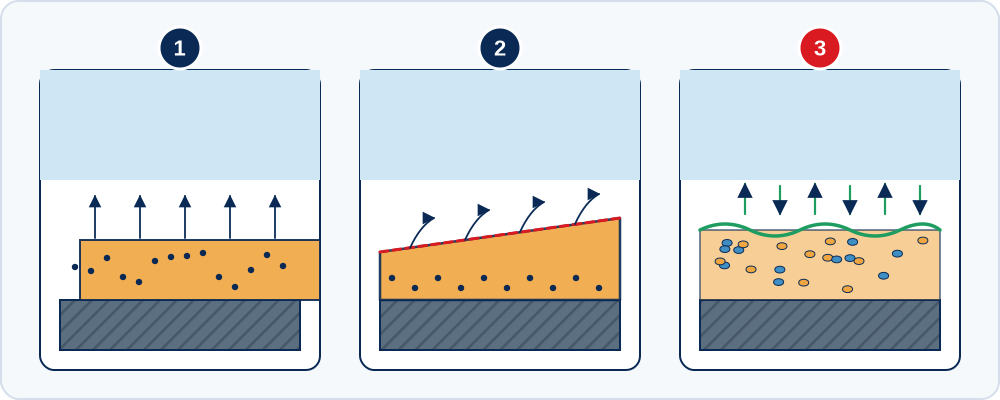
- Hard antifouling: biocide leaches from the binder into the water, the film stays at the same thickness through the season
- Self-polishing (SPC): the film erodes in water, fresh biocide reaches the surface
- Micron ReGen: a micro-porous film that renews its surface by ion exchange; there is no biocide release
2. Why does a biocide-free approach matter?#
Antifouling paints are among the most heavily regulated product groups in boating. The use of products containing copper and organic biocides is limited in coastal waters, marina basins and some regions; updated lists and national rules are a constant source of uncertainty for owners and yards. A toxic antifouling also brings extra burdens such as respiratory protection, waste management and sanding-dust control. All of these are covered in the series’ health, safety and environment article.
A biocide-free product can lighten part of this burden, but “contains no biocide” does not mean exemption from every legal obligation. Suitability is judged by composition, classification and the rules of your country. Because the details of the composition have not been published, we recommend making this assessment from the safety data sheet (SDS).
3. How does Surface Renewal Technology work?#
According to the manufacturer, the coating forms a micro-porous structure. In this structure, zones that hold water (hydrophilic) and zones that repel water (hydrophobic) sit side by side. The layer in contact with the water interacts physically and chemically with ions in the water, and this interaction continuously renews the properties of the surface. The aim is to make it harder for an organism to attach firmly; the model it draws on is the way natural organisms regulate their surface chemistry.
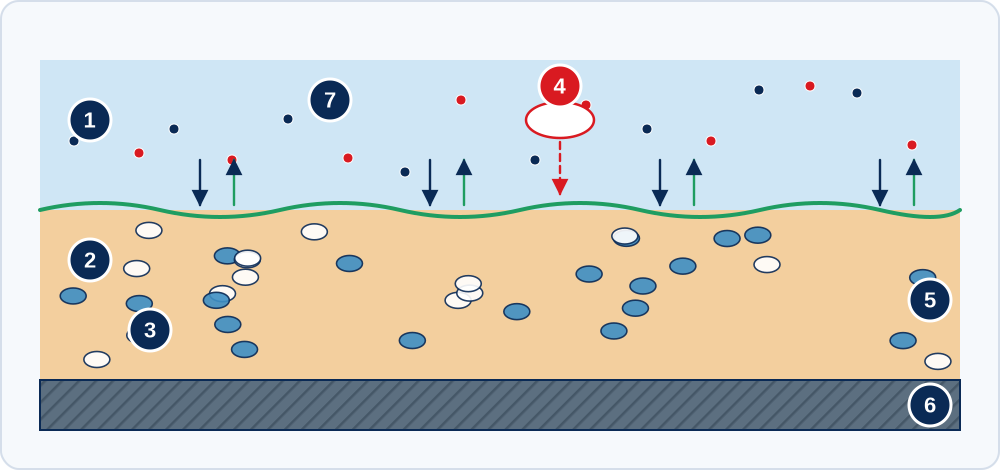
- Seawater: ions interact with the coating surface
- Hydrophilic micro-zones: zones that hold water and keep the surface moist and slippery
- Hydrophobic micro-zones: zones that repel water; having both characters together makes attachment difficult
- Organism: a larva or biofilm trying to attach to the surface
- Coating body: a porous film; it wears away gradually as it is used and washed
- Primer and substrate: Interprotect, Gelshield 200 or B-Free Conversion Coat
- Renewed surface: the layer in contact with the water is continuously re-formed
Two points must be kept apart here. First, the drawing is a schematic of the principle the manufacturer describes; it is not a scaled microscope image. Second, the composition and the reaction kinetics have not been published, so the details of the mechanism cannot be independently verified. Even so, the datasheet itself says plainly that the coating is “designed to wear away over time”; that is, ReGen is not a film that never wears, but a system that loses a thin layer in a controlled way.
4. Expected performance and what has been proven#
The aim of the product is to hold performance steady across seasons. The figure below compares this aim schematically with the two approaches we know. The curves are not measured data; they only show the logic of the approaches.
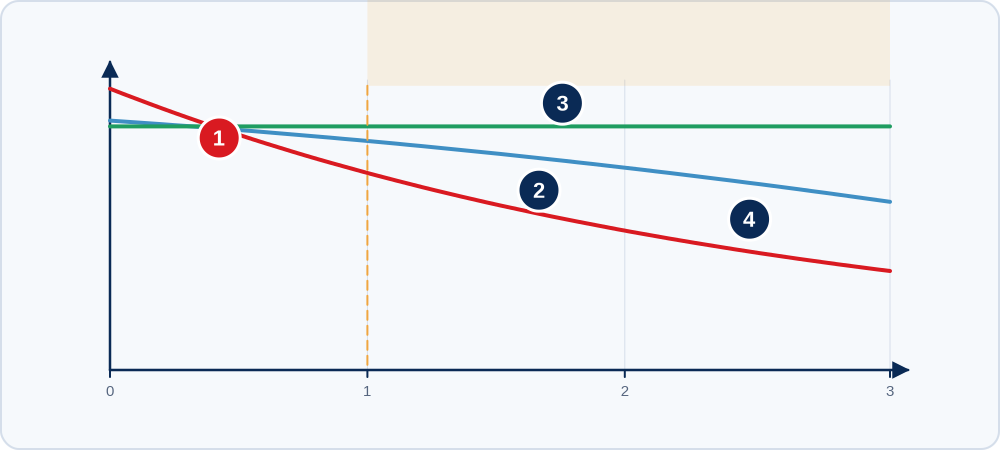
- Hard product: strong in the first season, then falls quickly as the biocide is exhausted
- Self-polishing product: slow, predictable decline as film thickness decreases
- ReGen: the steady performance the manufacturer is aiming for (a claim)
- Unverified zone: no independent data yet for multi-season durability and long idle periods
| Claim | Stated value | Missing information |
|---|---|---|
| Fuel consumption | About 4.7% reduction | Boat type, displacement, engine, test speeds, reference coating, measurement method |
| Speed | About 1.7% increase at equal engine power | The same gaps |
| Test duration | Three seasons in real conditions, one boat | Number of repeats, independent verification |
| Service life | No firm period given | Wear rate, effect of long idle periods, different salinity and temperature |
These figures are promising, but they come from a single boat in a single manufacturer test and the measurement protocol has not been disclosed. They should therefore be read as the manufacturer’s claim, not as a commitment. We will update this section when independent tests and second-season field data appear.
5. The system: which primer, on which surface?#
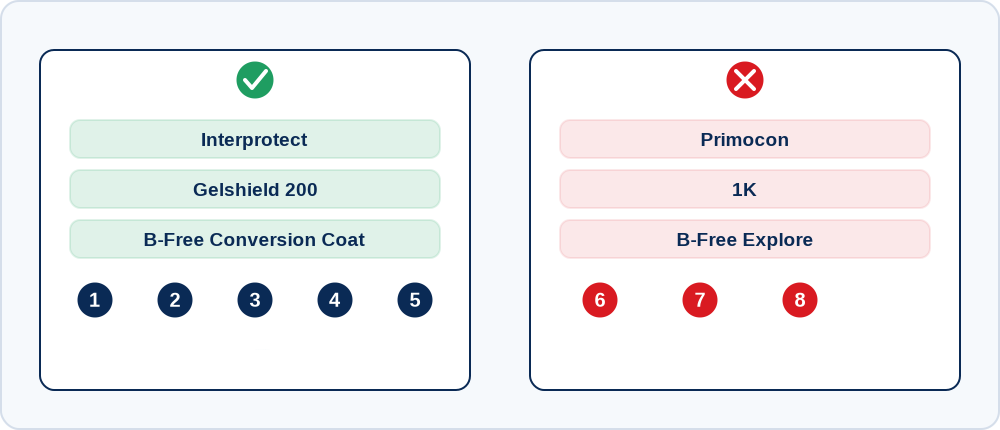
The most critical provision of the datasheet concerns compatibility. Micron ReGen can be used on suitably primed GRP, wood, steel and iron, lead and aluminium; but it is applied only over Interprotect, Gelshield 200 or B-Free Conversion Coat. It is not applied over one-component primers or directly over Primocon. Existing silicone-based systems, including B-Free Explore, are not suitable. It is not used on propellers, or on hypalon and PVC inflatable tubes.
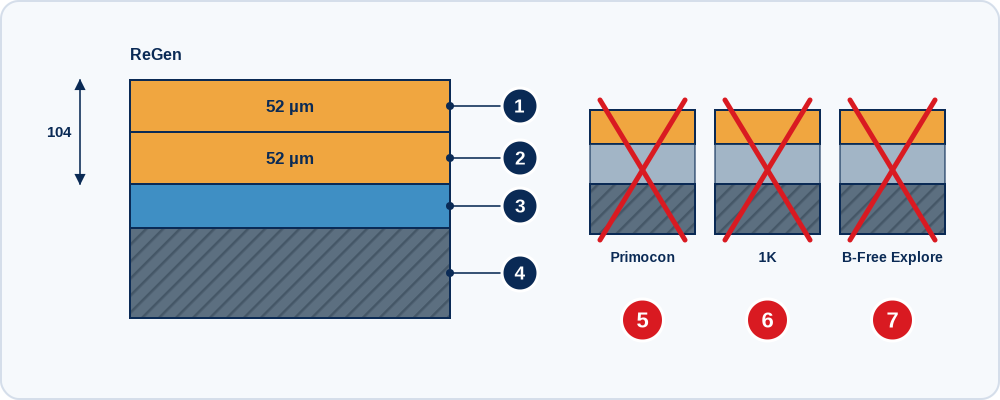
- Second coat: 52 µm dry film
- First coat: 52 µm dry film
- Primer: Interprotect (wood, steel, aluminium, zinc, lead) or Gelshield 200 (GRP and gelcoat)
- Substrate: prepared GRP, wood, metal or lead
- Direct application over Primocon: prohibited by the datasheet
- Application over a one-component primer: prohibited by the datasheet
- Application over a silicone system, including B-Free Explore: prohibited by the datasheet
- GRP and composites (primed)
- Wood and plywood (primed)
- Steel and iron (primed)
- Lead (primed)
- Aluminium (primed)
- Propeller: not suitable
- Hypalon tube: not suitable
- PVC tube: not suitable
6. Preparation by surface#
The datasheet describes a separate preparation for each surface. The common principle is removal of grease and dirt, then roughening in the stated sanding range, removal of dust and complete drying. Old coating in poor condition is removed completely, edges are feathered and the surface is wet-sanded; areas taken back to the substrate are treated separately by the surface rule below.
- Bare GRP, composite and laminate: degrease with solvent or Super Cleaner, sand with 80–120, then Gelshield 200
- Sound gelcoat: sand with 180–220; where repair is needed sand first with 60–80, then Gelshield 200
- Wood and plywood: 80–180, finishing with 280; dust is removed by brush and dry cloth, and if solvent is used wait until it has evaporated completely; then Interprotect
- Steel: blast to Sa 2½ or, if blasting is not possible, grind with 24–36 grit discs to a 50–75 µm profile; then Interprotect
- Aluminium: aluminium-compatible abrasive paper, 24–120; coarser grit is recommended for good adhesion; then Interprotect
- Zinc and galvanised steel: sand with 60–120, then Interprotect
- Lead: sand with 120 or a power wire brush, then Interprotect
On osmosis-affected GRP laminates, Gelshield Plus is used before the first epoxy primer coat; but Gelshield Plus is never applied directly to gelcoat. The details of this subject are explained in the series’ osmosis article and surface preparation article.
7. Application: coats, film thickness and equipment#
The datasheet defines two routes. By brush or roller, two coats of 52 µm dry film each are applied; the wet film thickness per coat is 100 µm. In professional spraying, a single coat of 200–300 µm wet is applied to aim for 100–160 µm dry film. In both methods an extra stripe coat is applied to high-wear areas such as chines, rudders, sterngear and leading edges.
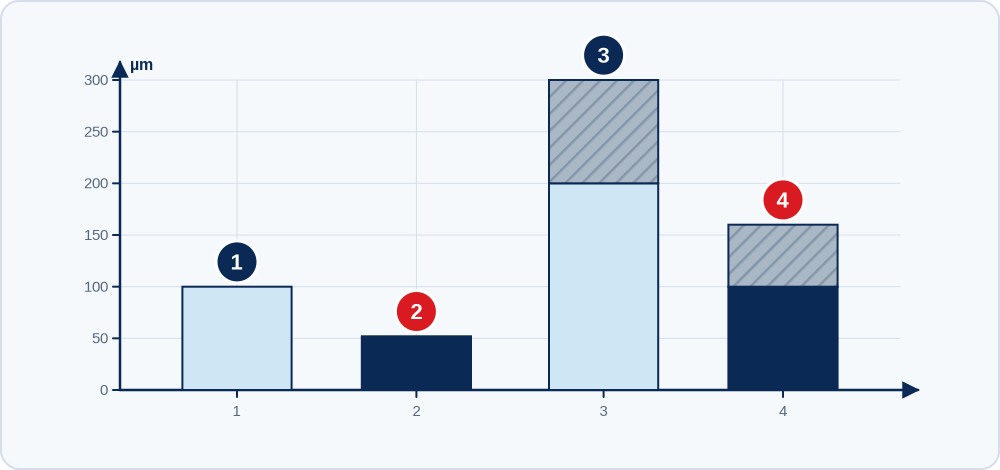
- Brush and roller, wet: 100 µm
- Brush and roller, dry: 52 µm per coat, 104 µm in total for two coats
- Spray, wet: 200–300 µm
- Spray, dry: 100–160 µm, in a single coat
The data prove consistent with one another: a 100 µm wet film drying to 52 µm points to a volume solids content of about 52 percent. This value is not stated in the datasheet; it is derived from the figures. It also fits a 200–300 µm wet film drying to 100–160 µm.
For application equipment the datasheet provides the following: short-pile mohair rollers are recommended and foam rollers are not. For spraying, a pressure of 176–210 bar (2500–3500 psi) and a tip of 0.33–0.43 mm (13–17 thou) are used. Mixing is continued until completely uniform. Thinning is needed only if skinning is seen; to ease application at low temperature or in windy weather, up to 10 percent of Thinner No.3 may be added. For cleaning equipment, YTA085 International Antifouling Thinner No.3 is used, and the equipment is cleaned very thoroughly to prevent silicone contamination; where possible, separate equipment is set aside for ReGen.
8. Paint consumption and quantity calculation#
The datasheet gives coverage both theoretical and practical. The theoretical value is calculated from the wet film thickness; the practical value includes waste, surface roughness and application losses. The practical-to-theoretical ratio is the same for all three values: about 60 percent.
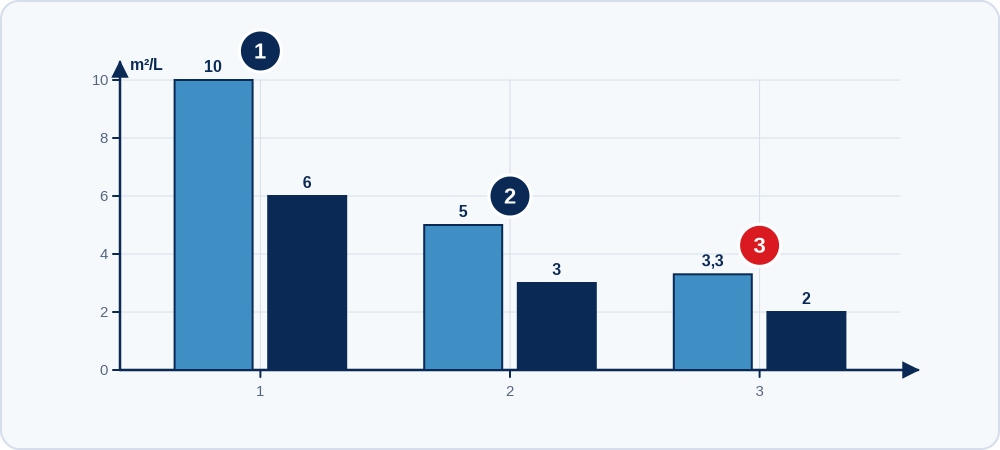
- Brush and roller, 100 µm wet per coat: theoretical 10, practical 6 m²/L
- Spray, 200 µm wet: theoretical 5, practical 3 m²/L
- Spray, 300 µm wet: theoretical 3.3, practical 2 m²/L
As an example, take a boat with an underwater surface area of 40 m². This is a calculation example; the real area is determined at survey according to the type and size of the boat.
| Method | Number of coats | Practical coverage | Quantity needed |
|---|---|---|---|
| Brush and roller | 2 | 6 m²/L | about 13.3 L |
| Spray, 200 µm wet | 1 | 3 m²/L | about 13.3 L |
| Spray, 300 µm wet | 1 | 2 m²/L | about 20 L |
Extra quantity must be added for stripe coats and wear areas. The calculation also shows that spraying does not save litres compared with brushing; the benefit of spraying is the smaller number of coats and the shorter application time.
9. Ambient conditions#
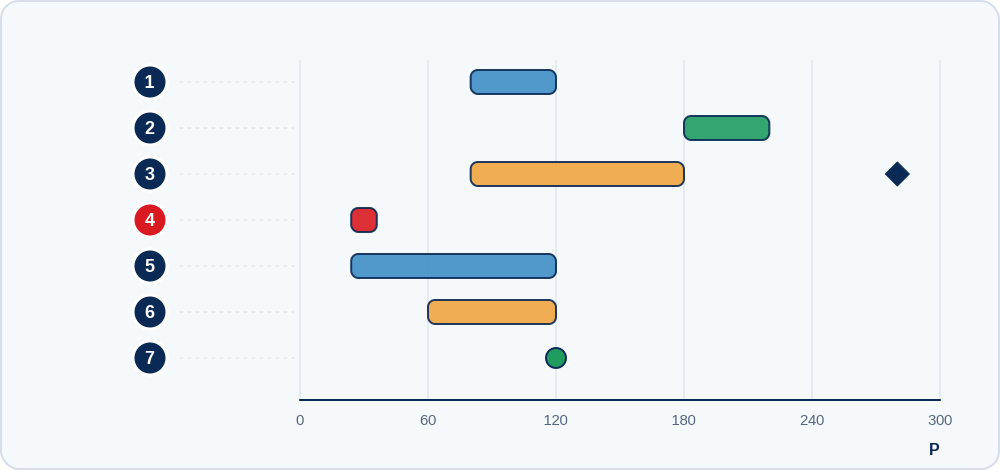
The datasheet gives three separate temperature windows: product temperature 5–35 °C, ambient temperature 5–35 °C and substrate temperature 7–35 °C. Storage is in the same range, away from direct sunlight and with the lid firmly closed. Ventilation must be adequate. Why dew point and humidity control matter is explained in detail in the series’ ambient conditions article.
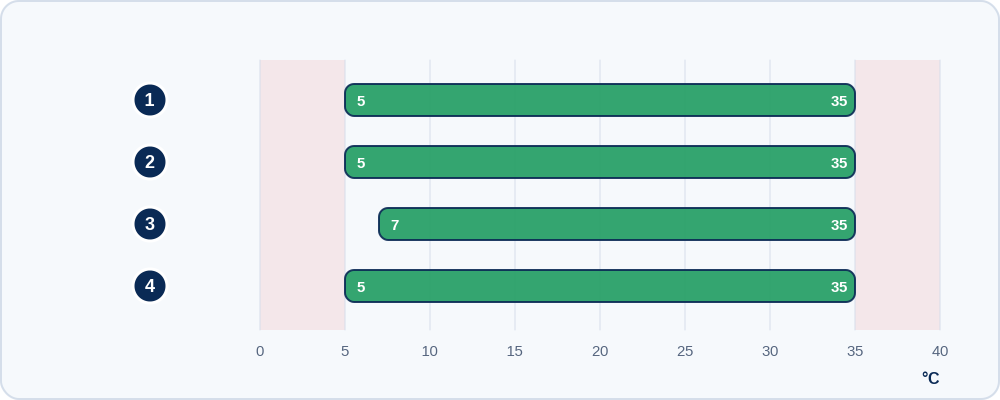
- Product temperature: 5–35 °C
- Ambient temperature: 5–35 °C
- Substrate temperature: 7–35 °C; the lower limit is slightly higher than the 5 °C given for product and ambient
- Storage: 5–35 °C, in a closed tin, away from sunlight
10. Haul-out, cleaning and relaunch#
Using Micron ReGen demands more discipline than conventional antifoulings, because the coating is designed to wear away over time and excessive cleaning reduces performance. The datasheet’s rules can be summarised as a cycle:
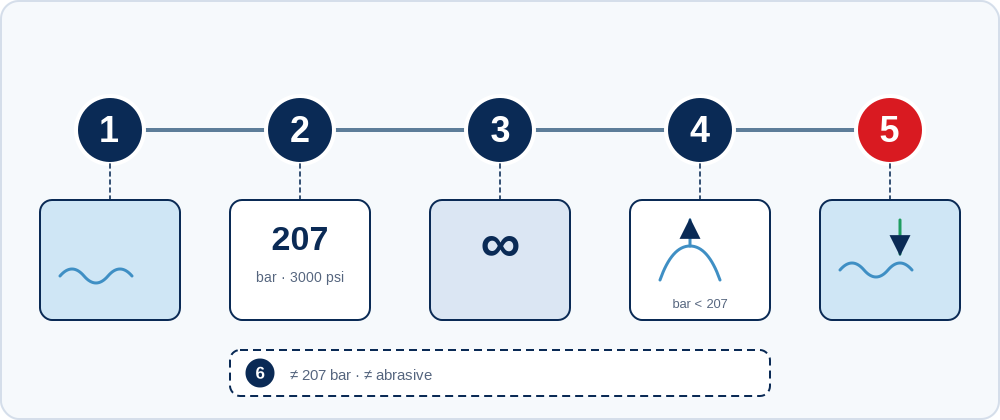
- Haul-out: the boat is lifted from the water
- Immediate wash: as soon as it is out of the water, fouling and contamination are removed with high-pressure fresh water at 207 bar (3000 psi); care is taken not to remove the remaining ReGen film
- Time ashore: if the boat is to stay ashore for a long time, step 2 must have been carried out
- Before relaunch: the aged ReGen surface is hydrated with fresh water from a low-pressure hose; this “activates” the surface
- Launch: the boat is put back in the water
- Mid-season: ReGen is not designed for mid-season cleaning; if necessary, only a non-abrasive cloth or pad is used, taking care not to remove the coating
The meaning of this cycle is that the surface is a structure that can lose its properties when it dries and needs reactivating with water. This rule is consistent with the mechanism described earlier in the article, but the reason is not explained in the datasheet; this is an inference.
11. High speed and wear areas#
The datasheet states that where the boat is regularly run at high speed, for example around 20 knots, early wear may be seen and an extra coat of ReGen should be applied. In practice this means talking to the representative before choosing the product for planing and semi-planing motor yachts, sport boats and fast charter boats. An extra stripe coat is also applied to chines, rudders, sterngear and leading edges.
12. Who is it suitable for, and who is it not?#
The data we have do not suffice to give the decision in one sentence, but they provide a framework. The comparison below reads the datasheet’s provisions and the missing information together.
- Owners looking for a biocide-free product, with a high environmental sensitivity
- Boats with a new application to be made, with a clean substrate that can be primed
- Users who can maintain a discipline of regular washing and care
- Professional yards that run application and haul-out in a planned way
- Boats that regularly run at high speed; risk of early wear
- Boats that sit idle at anchor for long periods; there are not enough data for these conditions
- Boats with an existing silicone system; according to the news reports coatings containing PTFE are also unsuitable
- Parts such as propellers, hypalon or PVC tubes; a different product is needed for these
The following order is suggested for the decision process:
- Surface: The existing coating and substrate are inspected
- Fit: Compatibility with primer and existing system is confirmed
- Profile: Speed and idle time at anchor are assessed
- Care: A washing and haul-out plan is made
- Application: Survey, work plan and application
13. Information not in this part of the datasheet#
The datasheet text we have covers a part of the document. The following data are not in this text and must be obtained from the manufacturer before the product is chosen and the application planned:
- Colour list and colour codes
- Recoating intervals between coats
- Time to launch and the limit for time ashore
- Specific gravity, volume solids and VOC value
- Pack sizes and shelf life
- A full compatibility table for application over existing coatings
- The safety data sheet (SDS) and official documents on biocide status
No time or value we give without obtaining these can be an alternative to the product’s current datasheet.
14. Application checklist#
15. Frequently asked questions#
Does Micron ReGen really contain no biocide?
The manufacturer presents the product as biocide-free. However, the details of the composition have not been published and this statement does not automatically give exemption from legal obligations. Study the safety data sheet.
Can I apply it over my existing antifouling?
The datasheet tells you to apply the product only over Interprotect, Gelshield 200 or B-Free Conversion Coat. If the type and condition of the existing coating are unknown, obtain written confirmation from the International representative before application.
How many coats are applied?
By brush or roller, 2 coats, each 52 µm dry film. In professional spraying, a single coat of 100–160 µm dry film. An extra stripe coat is applied to wear areas.
How many litres are needed for 40 m²?
About 13 litres for two coats by brush and roller at practical coverage, and about 13 litres by spray at 200 µm wet. Extra quantity is needed for stripe coats.
Can I clean the hull mid-season?
ReGen is not designed for mid-season cleaning. If needed, only a non-abrasive cloth or pad is used; excessive cleaning removes the coating and reduces performance.
Is it applied to the propeller?
No. The datasheet states that the product is not suitable for propellers, nor for hypalon and PVC tubes.
Is it suitable for fast boats?
The datasheet reports that boats regularly run at around 20 knots may see early wear and need an extra coat. Talk to the representative before deciding.
Sources and standards#
- International Micron ReGen technical datasheet, Ref. 10971, issue date 17.08.2026 (AkzoNobel)
- International Micron ReGen product page, international-yachtpaint.com (Germany page)
- ActuNautique, 18 November 2026: Metstrade 2026 report (based on the manufacturer’s announcement, not independently verified)
- ISO 8501-1: Preparation of steel substrates, rust grades and preparation grades (Sa 2½)
- ISO 4628: Evaluation of degradation of coatings