
Super Gloss HS is a single-pack high-gloss topcoat designed for brush and roller, produced with low VOC and high solids content. No data is available for spray application.
Super Gloss HS is preferred for high gloss on small boat and yacht surfaces. Its low VOC value is an advantage for use in enclosed or poorly ventilated spaces.
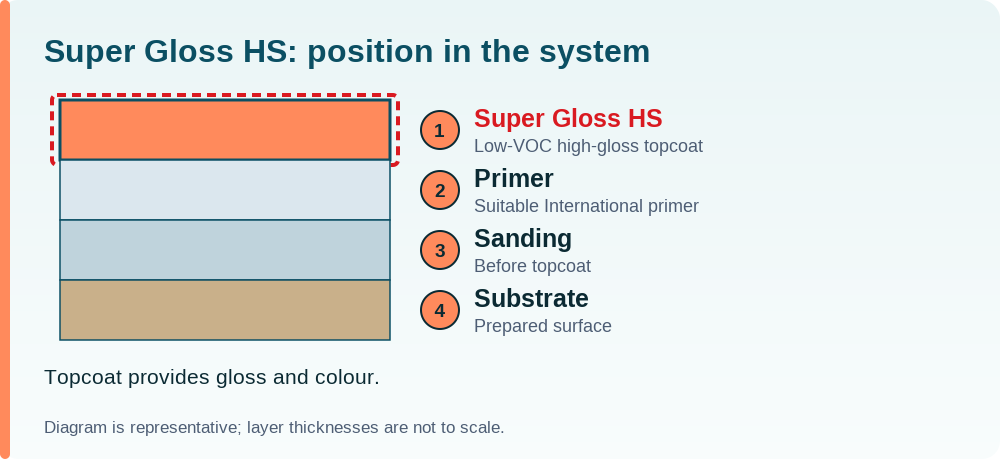
What does Super Gloss HS do and where does it sit in the paint system?#
As the topcoat, Super Gloss HS provides gloss and colour. Surface preparation and primer selection determine the evenness of the topcoat.
Which surfaces and where is it used?#
- Small yacht and boat topcoats
- High gloss by brush and roller
- Applications requiring low VOC
- Local repair
Surface preparation: the stage that decides the outcome#
Surface must be clean, dry and sanded. Applied over a suitable primer.
Mix ratio, induction and pot life#
Super Gloss HS is single-pack; stirring is sufficient. Thinning is not required; optionally up to 10% Thinner No.1 may be added.
| Value | Brush / roller |
|---|---|
| Mix | None |
| Reduction | Thinner No.1, 0–10% (optional) |
| Cleaning | Thinner No.1 |
Application: step by step#
Applied by brush and foam roller. Per coat, 45 µm dry film and 73 µm wet film are targeted. Maximum wet film must not exceed 100 µm.
Remove excess paint from the brush and roller to prevent excessive thickness.
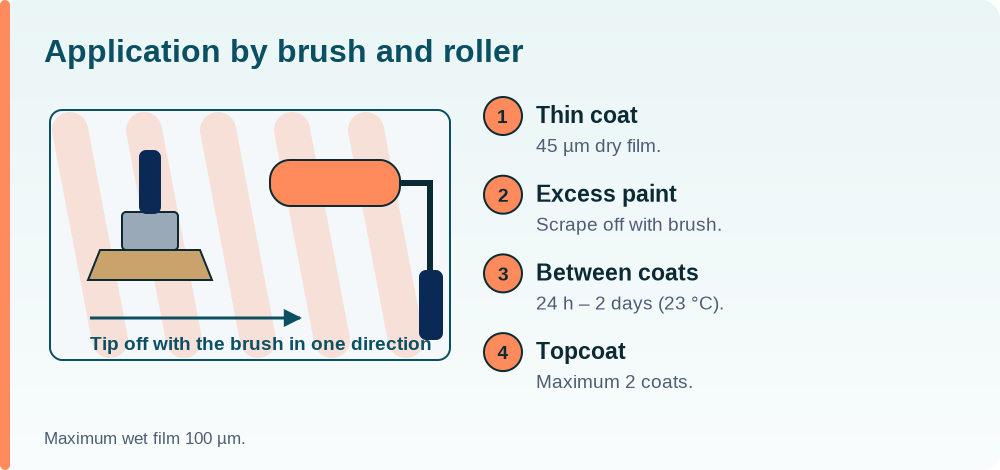
- Mix
Stir the tin thoroughly.
- First coat
Thin and even; 45 µm dry.
- Between coats
23 °C: min 24 h, max 2 days.
- Sanding
Sand before subsequent coats.
- Topcoat
Maximum 2 coats.
| Application | Dry film / coat | Wet film / coat |
|---|---|---|
| Brush / roller | 45 µm | 73 µm |
Drying and recoat times#
At 23 °C, Super Gloss HS is dust-free in 3.5 hours, fully cured in 13 hours and sandable in 20 hours.
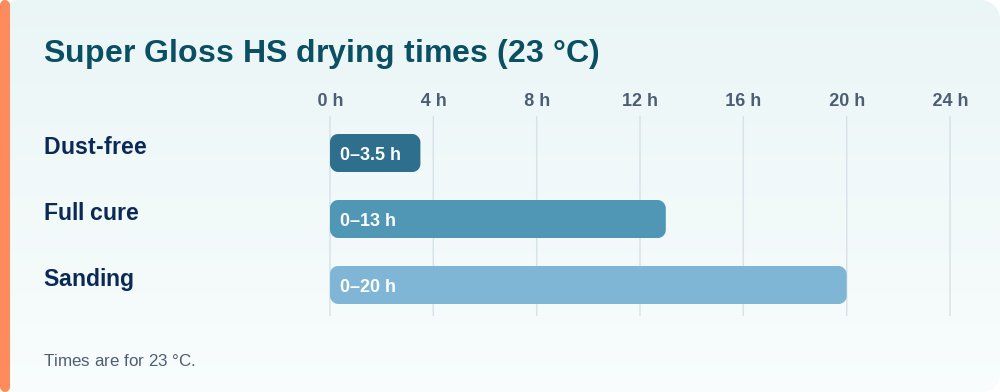
| Stage (23 °C) | Time |
|---|---|
| Dust-free drying | 3.5 hours |
| Sandable | 20 hours |
| Full cure | 13 hours |
| Recoat interval (min–max) | 24 hours – 2 days |
Application conditions: temperature, humidity and dew point#
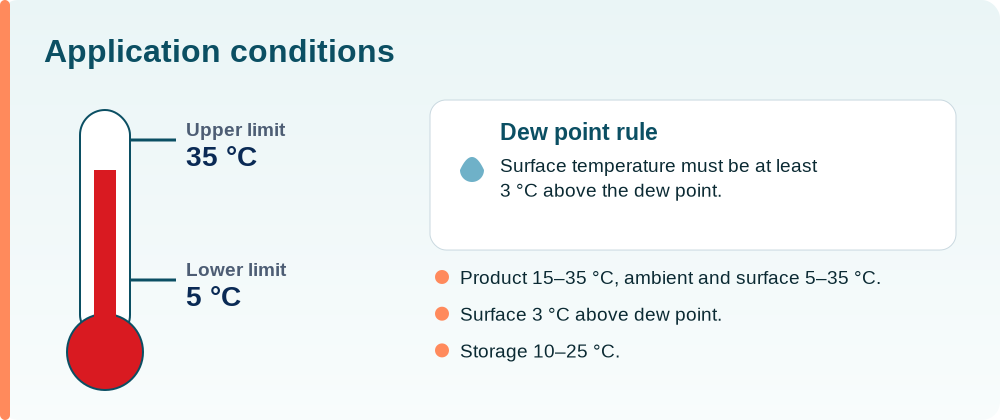
Product applied at 15–35 °C; ambient and surface at 5–35 °C. Do not apply below 5 °C. Surface must be at least 3 °C above dew point.
Tips from the professionals#
- Scrape excess paint off the brush.
- Use a foam roller.
- Support the recoat interval with sanding.
- Keep the sealed tin in a warm place.
Common mistakes#
- Thin, even coats
- Low VOC
- 24 h–2 days between coats
- Coat after sanding
- Thick single coat
- Evening application
- Constant water contact
- Excessive thinning
Health and safety#
Frequently asked questions#
How many coats of Super Gloss HS?
1–2 coats.
Is thinning needed for Super Gloss HS?
Generally not; optional up to 10% No.1.
What is the recoat interval for Super Gloss HS?
At 23 °C, between 24 hours and 2 days.
Can Super Gloss HS be sprayed?
The data sheet has no spray data; brush and roller are recommended.
_Source: International Yacht Paint (AkzoNobel) product technical data sheet (TDS) and product page (Super Gloss HS, Sprenger/International TDS). The values on this page are compiled from the manufacturer's published documents and may change as the product develops. Before application, always check the product label, the current technical data sheet (TDS) and the safety data sheet (SDS)._