
Paint and Coatings
Cratering and Fish Eyes in Paint: Why They Occur
Fresh paint forming small round pits is often a sign of surface contamination. This article explains causes, correction options and prevention steps, based on general sources.
Short answer
Cratering and fish eyes occur when wet paint film retreats from contaminated spots of low surface tension, leaving round pits. Sources list among the most common causes silicone, oil, grease, polish and wax residue, fingerprints, spray products and oil or moisture in the air. Correction means removing the source: after the paint hardens, sand, clean the surface and recoat thinly; simply painting over usually does not solve it. The core of prevention is cleaning and wiping with separate cloths. This article is general information.
Key points
- Cratering and fish eyes are round pits formed when paint retreats from contaminated spots.
- Main sources: silicone, oil, grease, polish and wax residue, fingerprints, spray products, dirty air.
- Correction: stop painting, sand once hard, clean out the source and recoat thinly.
- Simply painting over usually brings the defect back.
- Prevention: clean with a suitable solvent, wipe with separate cloths and check just before painting.
1. What are cratering and fish eyes?#
Cratering is when a freshly applied paint film retreats from particular spots on the surface, leaving small, round, crater-like pits. Fish eyes is the same defect in a form that often has a contamination spot at its centre and looks eye-like. Paint-maker sources and automotive paint guides generally treat the two names within one defect family. The defect comes from the wet film being unable to spread evenly; a contaminant locally lowers surface tension and the paint runs away from that point.
This defect differs from orange peel or runs: in orange peel the surface is generally textured, whereas in cratering there are distinct, usually round voids. On boats the cause is often a small oversight in surface preparation, so this article focuses on cleaning and preparation.
2. Main sources#
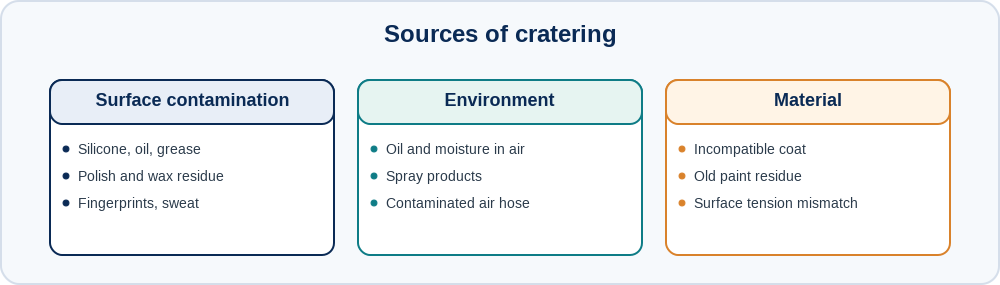
General paint sources list for cratering most often silicone-containing products, oil and grease, old polish and wax residue, fingerprints and skin oils such as sweat. In a boat setting silicone sealants, some polishes, rubber protectants and spray lubricants are common suspects. There are airborne sources too: oil and moisture in the compressed air line, mist from spray products used nearby and smoke and dust from other work in the shop.
Material causes are also described: an incompatible underlying coat, old paint residue not fully cleaned or a surface tension difference between two coats. In such cases the defect may appear over the whole surface. Silicone is especially difficult because even very small amounts can be effective and sanding can spread it across the surface; so cleaning before sanding is advised in areas with suspected silicone. This information draws on general sources and varies with product and application.
| Source | Detail | First step |
|---|---|---|
| Silicone | Sealant, polish, spray | Clean with suitable solvent before sanding |
| Oil and grease | Hands, engine area, compressor | Wipe with solvent, separate cloth |
| Polish and wax | Earlier maintenance | Remove completely |
| Fingerprints | Skin oils | Gloves, clean cloth |
| Airborne contamination | Oily air line, spray products | Filter, isolate area |
3. Cleaning method#
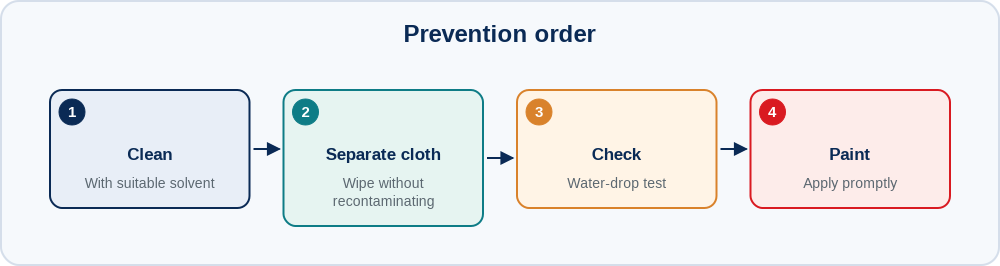
The method that stands out in sources is two-cloth wiping: apply solvent to the surface with one cloth and, before the solvent dries, lift the contamination with a clean second cloth. Reusing the same cloth spreads contamination again. The solvent should be the cleaner or silicone remover recommended in the paint maker’s data sheet; an unknown solvent can damage the surface. Wearing gloves prevents fingerprints.
Many sources recommend verifying cleanliness just before painting; a common method is the water-drop test: water spreads evenly on a clean surface and beads on a dirty one. This is a simple indicator, not a precise measurement. After cleaning, paint should be applied promptly without letting the surface get contaminated again.
4. Correction: painting over is not enough#
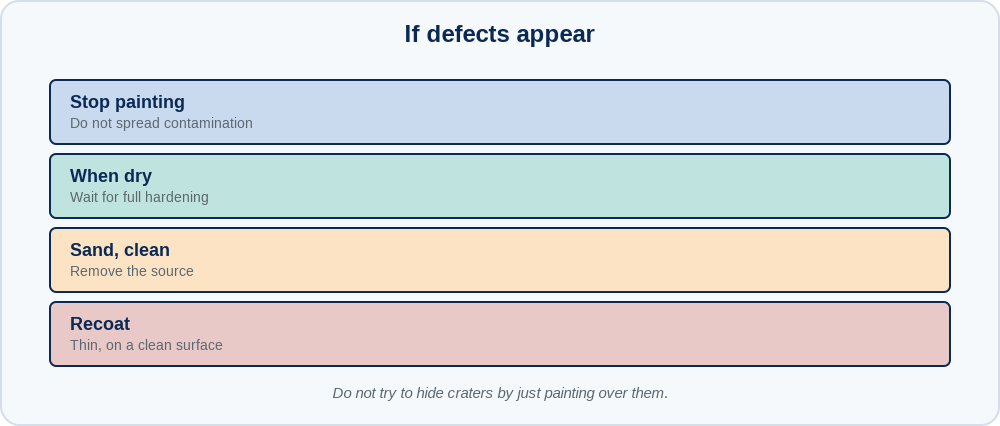
When cratering appears, the first step is to stop painting to avoid spreading contamination. Sources note that wet paint cannot be fixed without removing the source; after hardening, sand the paint, clean the surface, especially with solvent where silicone is suspected, and recoat thinly. Some painters suggest in difficult cases adding special surface-tension-lowering additives (fish eye eliminators) to the paint; such additives depend on the product maker’s approval, can cause problems for later coats or repairs in some systems and are generally considered a last resort.
A forum user’s experience describes needing to wipe and sand repeatedly to remove silicone-caused cratering; that is a single experience but consistent with the sources. If the defect has spread over a wide area, consulting an expert and preparing a test panel can prevent a costly repeat.
- Stop painting and determine how far the defect spreads.
- Wait until the paint hardens.
- Find the source: silicone, oil, polish, air line.
- Two-cloth wipe with suitable solvent before and after sanding.
- Check cleanliness; paint a test panel if needed.
- Recoat thinly and watch the result.
4b. Why is silicone so problematic?#
Silicone has very low surface tension, so it prevents paint film from holding at that spot. In boat care silicone can come from many places: sealant around glass and windows, some hull polishes, plastic and vinyl protectants and even some hand creams and spray lubricants. Using these products in the same shop area can let mist reach the surface even hours after painting. Separating the paint area from other work, keeping silicone-containing products out of it and keeping shared tools apart are commonly suggested simple measures.
During sanding silicone can be spread across the surface by dust and paper; so wiping with solvent before sanding in a suspect area and again after sanding is advised. Changing sandpaper often also reduces the carrying of contamination. This information draws on general sources; for each product’s cleaning needs see the maker’s data sheet.
4c. Test panel and small trial#
If there is uncertainty about the surface’s history or the compatibility of a new underlying coat, it makes sense to trial in a small hidden area or on a panel of the same material before painting the whole surface. The same cleaning, sanding and paint steps are applied on the panel and the surface is observed until the paint dries. If cratering appears the source is investigated and cleaning is repeated before applying to the whole surface. This takes time but costs far less than reworking a large area.
5. Common mistakes#
- Sanding a surface with suspected silicone without cleaning it.
- Reusing the same cloth repeatedly.
- Letting solvent dry without wiping.
- Touching the surface with fingers.
- Ignoring oil and moisture in the air.
- Trying to hide the defect by simply painting over.
- Using additives without maker approval.
6. Checklist#
7. Conclusion#
Cratering and fish eyes signal surface contamination. The fix is to find and remove the source, sand and clean once hard and recoat thinly; just painting over usually is not enough. Prevention rests on meticulous cleaning, separate cloths and a clean environment. This article is general information; the data sheet and expert opinion come first.
Frequently asked questions#
Are cratering and fish eyes the same?
In practice they are one defect family: wet film pulling away from contaminated spots to leave round pits. Sources use the names interchangeably.
What is the most common cause?
Contamination of low surface tension on the surface or in the air, such as silicone, oil, grease, polish or wax.
Can I just paint over it?
Generally not recommended; unless the source is removed the defect can appear in the new coat too.
How is it corrected?
After the paint hardens sand, clean the surface and recoat thinly.
How is it prevented?
Clean with a suitable solvent, wipe with separate cloths and check the surface just before painting.
Was this guide helpful?
Thank you! Your feedback has been saved.
Guide content is for general information; in practice, the current technical data sheet of the product applies.
Keep reading
Related guides
Boat Colour Selection and Solar Reflectance: Effect of Heat Absorption on Surfaces
A study of the effect of boat paint colour on solar reflectance and surface temperature.
2 min read Paint and CoatingsCauses and Diagnosis of Paint Blistering
A study of the sources, types and diagnostic approach to blistering on boat paints.
2 min read Paint and CoatingsNumber of Coats in Epoxy Coating Systems
A study of the effect of the number of coats in epoxy coating systems on protective performance and thickness.
2 min read