
Paint and Coatings
Paint Thickness Gauges: Wet and Dry Film
The only reliable way to verify the coating was applied at the thickness the maker requires is to measure it. This article generally explains wet and dry film measurement, gauge types and correct use.
Short answer
Wet film thickness (WFT) is measured during application with a comb or wheel and guides you toward the target dry film thickness (DFT); dry film thickness is measured on the cured coating. On steel a magnetic probe is generally used and on non-ferrous metals an eddy current probe; non-metal substrates such as fibreglass and wood need ultrasonic or other methods and wet film measurement gains particular importance there. For a correct result follow the gauge manual and calibration and record measurements. This article is general information; see the maker’s technical data sheet for target thickness.
Key points
- Wet film (WFT) is measured during application, dry film (DFT) after cure.
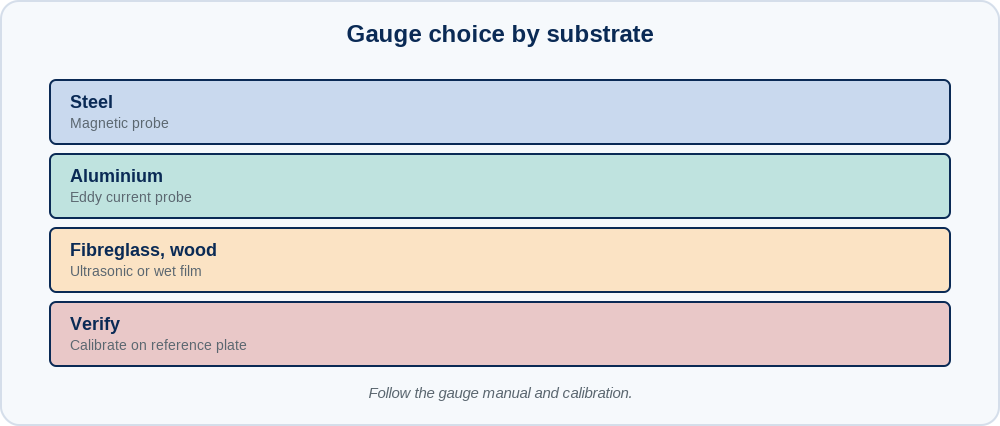
- Magnetic probes are used on steel, eddy current on non-ferrous metal.
- On fibreglass and wood most classic probes do not work; wet film or special gauges are needed.
- Gauge calibration and surface preparation affect results.
- The maker’s technical data sheet governs target thickness; record measurements.
1. Why measure thickness?#
A coating system’s protection and life performance depend heavily on the applied film thickness. Too thin means insufficient barrier and early wear; too thick can create problems such as trapped solvent, sagging, cracking and long cure. The maker gives a target dry film thickness (DFT) range for each product and the only reliable way to reach that value is to measure; estimating by eye is often misleading.
This article gives a general summary; always consult the maker’s technical data sheet for target thicknesses of specific products. No product or thickness value is recommended here. For wet film comb use see the related article.
2. Wet versus dry film#
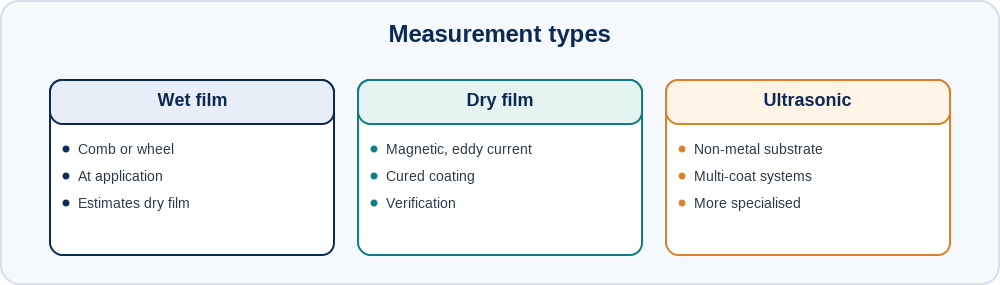
Wet film thickness (WFT) is measured during application while the coating is still liquid. This measurement shows at once whether the applicator is putting on the right amount and allows correction if needed. Dry film thickness (DFT) is the thickness after the coating has cured. Because solvent evaporates dry thickness is smaller than wet; the ratio depends on the product’s volume solids and is given in the technical data sheet. So wet film measurement is an estimate and guide for reaching the target DFT; definitive verification is by dry film measurement.
The two measurements do not replace each other; they complement each other. Wet measurement helps catch errors during application; dry measurement documents that the job has really reached target. In multi-coat systems there may be separate targets per coat and intercoat cure times can affect the thickness calculation.
| Feature | Wet film (WFT) | Dry film (DFT) |
|---|---|---|
| When | During application | After cure |
| Purpose | Immediate correction, DFT estimate | Verify target reached |
| Typical tool | Comb, wheel | Magnetic, eddy current, ultrasonic |
| Limitation | An estimate, in-coat product loss | Needs a gauge suited to substrate |
3. Gauge types#
Dry film gauges are chosen by the substrate material. Probes working on the magnetic induction principle are used on iron and steel substrates. Eddy current probes measure paint thickness on non-ferrous conductive metal substrates such as aluminium. Many instruments come with combination probes that merge the two principles and detect the substrate automatically. These instruments are generally used on metal hulls and some hardware parts.
On non-metal substrates such as fibreglass and wood, magnetic and eddy current probes do not work because measurement relies on the substrate’s electromagnetic properties. For these substrates there are special instruments such as ultrasonic thickness gauges; however they are more specialised, often costlier and may not give the same reliability on every coating build. For this reason on fibreglass boats wet film measurement during application and checking the application rate (for example area covered per litre) are in practice more decisive. For gauge selection look at the maker’s substrate compatibility information.
4. Principles for correct measurement#
Measurement quality depends on a few points. The first is calibration: the zero and reference shim checks the instrument manual recommends should be done; calibration reduces deviations that depend on substrate and surface. The second is the surface: rough, dirty or curved surfaces can affect readings; the probe should be placed cleanly and flat. The third is the number of measurements: instead of one reading, taking several readings in several areas and looking at the average and extremes is more reliable. Measurement points should be spread over different parts of the hull and special areas such as edges, corners and near welds assessed separately.
The fourth is timing: dry film measurement should be taken after the coating has fully cured; early measurement can crush a soft film and give a wrong value. The fifth is records: noting area, date, coat number and values helps trace causes if problems arise and in warranty discussions. No specific tolerance or acceptance criterion is recommended in this article; the maker’s data sheet and, if needed, relevant standards govern the acceptance range.
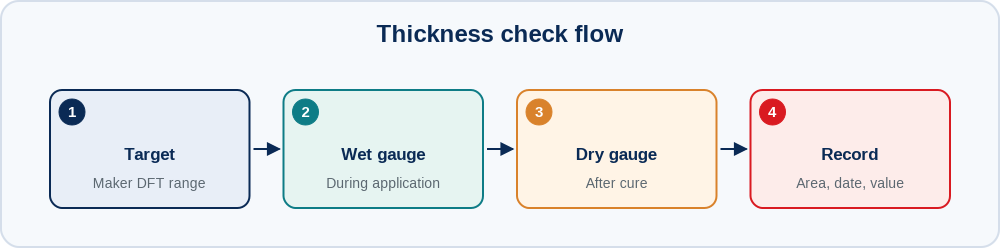
- Take target WFT/DFT and volume solids from the maker’s technical data sheet.
- Choose a gauge and probe suited to the substrate.
- Calibrate the gauge per the manual.
- Measure wet film during application; correct if needed.
- After cure measure dry film at several points.
- Record results with area, date and coat information.
- If deviations exist take the maker’s or an expert’s view.
5. Interpreting results#
Measured values are compared with the target range. If a value is below target an extra coat or additional application may be needed; if far above target there is a risk of trapped solvent, sagging or cure delay and consulting the maker is sensible. But every measurement has uncertainty; rather than making a quick decision from one extreme value look at the pattern and average. In multi-coat systems intermediate coat thickness affects the total, so keeping coat-by-coat records during application is useful.
Because direct dry film measurement on a fibreglass substrate can be difficult, recorded wet film values and the calculation of product consumed against area covered are assessed together. These indirect methods give an approximate value; a suitable instrument and maker support are needed for a definitive result.
5b. Practical tips for boats#
On boats thickness checking is usually done on large surfaces in changeable conditions. During application surface temperature, humidity and wind can affect the wet film reading and how the product flows; so it matters to measure straight after application keeping the comb clean. On large hulls dividing the surface into zones and noting the product consumed in each zone helps both estimate average thickness per coat and spot missed areas early. Remember product can behave differently on horizontal and vertical surfaces, with sagging risk higher on verticals.
Also at edges, corners, sharp protrusions and rivet or screw heads the film naturally thins; applying an extra stripe coat to these areas and measuring there separately is common practice. When storing the gauge keep the probe clean, protect it from knocks and do not lose the calibration plates. Follow the maker’s recommendations for the gauge’s maintenance and calibration interval.
6. Common mistakes#
- Guessing target thickness without checking the data sheet.
- Finishing application without wet measurement.
- Not calibrating the gauge.
- Trying to use a metal probe on fibreglass.
- Measuring dry film before cure is complete.
- Deciding from a single reading.
- Not recording measurements.
7. Checklist#
8. Conclusion#
Paint thickness measurement is the basic way to verify coating performance. Wet film guides during application and dry film documents that the job reached target. Magnetic probes on steel, eddy current on non-ferrous metal; fibreglass and wood need wet film or special instruments. Calibration, multiple readings and records raise reliability. The maker’s technical data sheet governs target values; this article is general information.
Frequently asked questions#
What is the difference between wet and dry film?
Wet film is thickness measured during application; dry film is thickness after cure. Dry thickness is lower than wet because solvent evaporates and the ratio depends on the product’s volume solids.
How do I measure thickness on a fibreglass hull?
Classic magnetic and eddy current probes need a metal substrate; on fibreglass wet film measurement, ultrasonic or other special gauges may be needed. Consult the gauge maker.
Where do I find the target thickness?
In the product’s technical data sheet: it generally gives wet and dry film thickness per coat and volume solids.
Is calibration needed?
Yes; most gauge manuals recommend checking with a zero and reference shim. Calibration reduces deviations that depend on substrate and surface.
Why should I record measurements?
Knowing what thickness was applied where helps find the cause if problems arise and in warranty discussions.
Was this guide helpful?
Thank you! Your feedback has been saved.
Guide content is for general information; in practice, the current technical data sheet of the product applies.
Keep reading
Related guides
Boat Colour Selection and Solar Reflectance: Effect of Heat Absorption on Surfaces
A study of the effect of boat paint colour on solar reflectance and surface temperature.
2 min read Paint and CoatingsCauses and Diagnosis of Paint Blistering
A study of the sources, types and diagnostic approach to blistering on boat paints.
2 min read Paint and CoatingsNumber of Coats in Epoxy Coating Systems
A study of the effect of the number of coats in epoxy coating systems on protective performance and thickness.
2 min read