
Refit and Maintenance
Propeller, Shaft, Rudder and Stern Tubes: Refit and Alignment
The engine delivers its power to the propeller through the shaft, and the rudder steers the boat. Every part of the propulsion system must work in line with the others. In a refit the system is dismantled, measured and brought back into correct alignment.
Short answer
Propulsion refit covers checking wear on the propeller, shaft, rudder and stern tubes, measuring alignment and renewing bearing seals. Alignment is the basis of a vibration-free and efficient boat.
Key points
- Shaft alignment directly affects vibration and bearing wear.
- The propeller is assessed for blade wear and corrosion.
- Rudder and stern tube bearings are measured for clearance and sealing.
- Alignment results are recorded with measured values in the refit file.
The parts of the propulsion system#
The propulsion system is a chain that transfers engine power into the water. The engine turns the shaft, and the shaft passes through a tube in the hull, called the stern tube, to connect to the propeller outside. The rudder sits behind the propeller and sets the boat's direction. Each link in this chain depends on the others. A fault in one link spreads through the whole chain as vibration and loss of efficiency.
Propeller inspection and renewal#
The propeller is examined for blade surface, edge sharpness and attachment to the shaft. If blades show cracks, edge nicks or corrosion, the propeller is repaired or replaced. Propeller repair is completed with balancing; an unbalanced propeller shakes the boat and overloads the bearings.
| Part | Check | Outcome |
|---|---|---|
| Propeller blades | Cracks, nicks, erosion | Repair or replacement |
| Propeller balance | Static and dynamic balance | Balancing |
| Shaft | Straightness and surface wear | Straightening or replacement |
| Stern tube bearing | Clearance and sealing | Bearing renewal |
Shaft alignment#
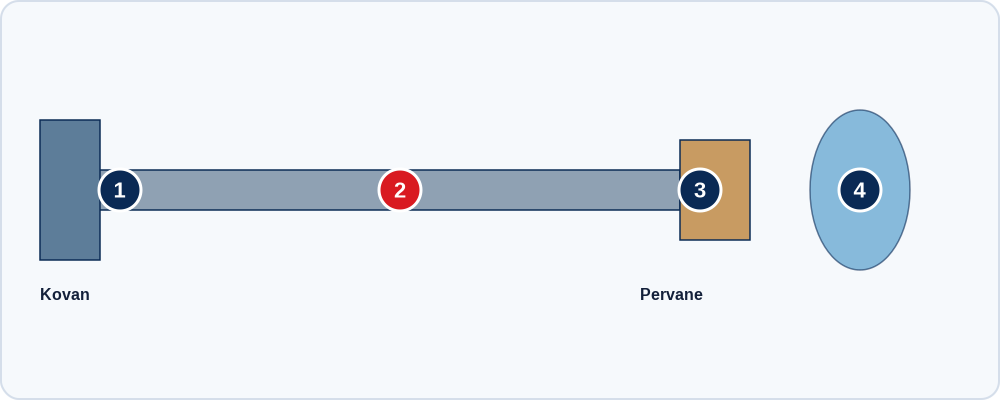
Shaft alignment means the shaft runs in a correct straight line between the engine output and the stern tube bearings. A misaligned shaft loads the bearings on one side, generates vibration and breaks the stern tube seal. Alignment is measured at the shaft coupling points and, where needed, the engine mounts or bearings are adjusted. The measurement values are added to the refit file.
Rudder and stern tubes#
The rudder is a blade that sets the boat's heading. The rudder stock is held in the hull by bearings in the rudder tube, which needs a sealing system to keep water out. Clearance in the rudder stock loosens the steering; this clearance is measured and the bearing is replaced accordingly. Rudder tube and stern tube seals are points that must be checked regularly.
Alignment and sealing test#
At the end of the refit the alignment is measured again and the stern tube seal is tested. During the test the engine is run at low revolutions and vibration and heating are observed. Any leak from the stern tube is watched for. The results are recorded.
Records and service interval#
Measurements, material information and service intervals for the propeller, shaft, rudder and stern tube are kept in the boat file. The date of gland and bearing renewal is added to the next maintenance plan.
Shaft sealing systems#
Two main systems stop water entering where the shaft leaves the hull. In a traditional stuffing box, rings of packing around the shaft are compressed by a gland nut. It is adjusted to drip a little water while running, which cools and lubricates the packing. Packing tightened until it never drips overheats, wears the shaft and soon fails. Packing is renewed in a refit and adjusted again with the engine running.
In mechanical dripless seals, a ring turning with the shaft presses against a stationary face to seal. These do not drip, but the bellows and faces must be checked regularly, the manufacturer's replacement interval is followed, and air may need to be bled from the seal after launch.
The water-lubricated cutless bearing#
The bearing that carries the outer end of the shaft is usually a grooved rubber bush lubricated by seawater flowing through the grooves as the shaft turns. Over time the rubber wears and clearance grows. Clearance is checked by moving the shaft up and down in the bearing or with gauges. Excess clearance causes vibration and damages the shaft seal; the bearing is then renewed.
Propeller types#
Boats are fitted with different propellers according to use. Fixed-blade propellers are simple and robust. Sailing boats use folding or feathering propellers that create little drag under sail. These have moving parts; hinges, pins and gears are checked for wear in a refit and lubricated as the maker advises.
Pitch and diameter must suit the engine power and boat speed. When the engine or propeller changes, this match is reassessed; a mismatched propeller stops the engine reaching full revs or lets it over-rev.
Fitting the propeller#
The propeller sits on the shaft taper and is held against rotation by a key. On fitting, it is checked that the taper bears fully in the hub; incomplete contact leads to loosening and cracks at the keyway over time. The nut is secured with a suitable locking arrangement, and the shaft anode is renewed at the same time.
Water in the rudder blade#
Water can find its way into a fibreglass rudder blade over time, travelling along the rudder stock where it enters the blade and soaking the foam core. In cold climates it can freeze and split the blade. A rudder checked with a moisture meter is opened, dried and resealed where needed, and the stock's internal connection is inspected at the same time.
How much should a stuffing box drip?
It depends on the packing type and the maker's advice. The aim is a small, steady drip that keeps the packing cool.
When is a propeller replaced?
When the blades have damage that cannot be repaired, or when the propeller does not suit the engine and boat.
Conclusion#
Propulsion refit makes the boat run free of vibration, efficiently and safely. When the propeller balance, shaft alignment, rudder clearance and stern tube seal are all confirmed, the boat moves smoothly through the water. The next article looks at the cathodic protection system, the electrochemical protection of the hull and its fittings.
Was this guide helpful?
Thank you! Your feedback has been saved.
Guide content is for general information; in practice, the current technical data sheet of the product applies.
Keep reading
Related guides
Engine Room Refit: Engines, Shaft Line and Exhaust
How are the engine, shaft line and exhaust checked and renewed in an engine room refit? Alignment, sealing and ventilation principles.
6 min read Refit and MaintenancePlumbing Refit: Fresh Water, Waste and Seawater Circuits
How is a boat's plumbing renewed? Hose, pump and sealing principles for the fresh water, waste and seawater circuits.
6 min read Refit and MaintenanceSteel Hull Refit: Thickness Gauging, Plate Renewal and Corrosion Protection
How is plate thickness measured on a steel boat, when is plate renewed and how is corrosion prevented? Principles of gauging, welding and coating.
7 min read