
Paint and Coatings
Sand and Dry Ice Blasting for Boat Hull Cleaning
Cleaning a hull by blasting can save time but the wrong media or inexperienced application can damage the gelcoat. This article compares sand, soda, wet and dry ice methods, their risks and preparation steps, based on sources.
Short answer
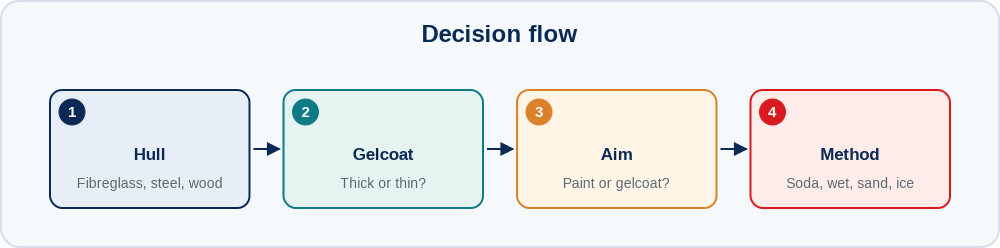
On fibreglass hulls traditional dry sand blasting is too aggressive and chews up the gelcoat; Sail Magazine says soda blasting is very effective yet gentle enough to leave gelcoat intact, while Graco says dry blasting damages the gelcoat and wet blasting leaves it intact while being effective. Even soda can seriously damage gelcoat if poorly handled and is not recommended on boats with very thin gelcoat or gelcoat sanded away almost to nothing. For dry ice blasting there is limited and conflicting experience on boat hulls; testing first is advised. Sand blasting can be used on steel and aluminium. This article is general information.
Key points
- Dry sand blasting is too aggressive on fibreglass; soda and wet blasting are gentler options for gelcoat.
- Even soda can damage gelcoat in inexperienced hands; not advised on thin-gelcoat boats.
- For dry ice blasting there is limited, conflicting experience in boat paint removal; cost and speed can be issues.
- Sand blasting can be used on steel and aluminium hulls.
- Preparation: seal the area, protect fittings, start with a small trial and prime the bare hull at once.
1. Why is blasting preferred?#
When old paint layers have thickened and hand scraping or sanding takes too much time and effort, blasting is a fast option. Cruising World writes that soda blasting has become a method many boat owners choose for bottom-paint removal; 48 North says sand, soda, shell or water-based blasting services are available at most boatyards and are the best option for stripping down to the bare hull. But blasting requires choosing the media, pressure and applicator skill correctly; a wrong choice causes permanent gelcoat damage.
This article compares blasting media with a focus on fibreglass hulls. For general removal methods see the related article; for safety and waste see the stripper safety article.
2. Dry sand blasting#
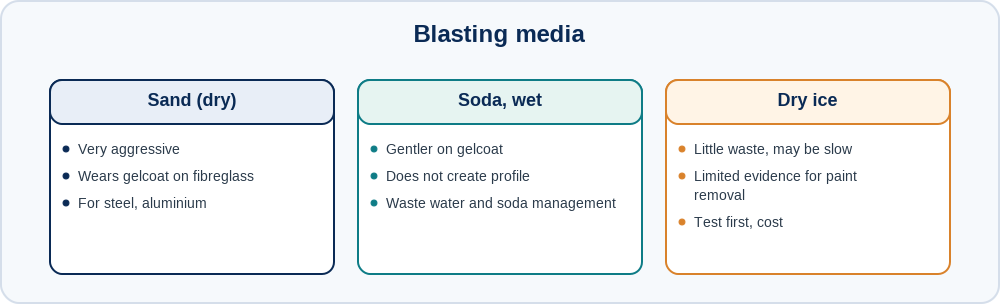
Sail Magazine says traditional sand blasting is overly aggressive and chews up the gelcoat on a fibreglass hull; by contrast soda blasting is very effective but gentle enough to leave gelcoat intact. Graco also writes that for antifouling removal on a fibreglass hull dry blasting is too aggressive as it damages the gelcoat, while wet blasting is gentle enough to leave the gelcoat intact while still being very effective. Cruising World says steel and aluminium hulls can generally stand up to sand blasting. So dry sand blasting is mostly for metal hulls.
Practical Sailor reminds that if all that is wrong with the underbody is flaking bottom paint and there is no sign of blistering, gelcoat crazing or cracking, the last thing you want to do is damage the gelcoat. Depending on the method used some systems cut through paint, gelcoat and even the top layers of laminate; a system can produce an impact that scours rust from steel or rips gelcoat and FRP skin right off a hull. For this reason media choice is considered critical on fibreglass hulls.
3. Soda and sponge blasting#
According to Sail Magazine, because soda breaks into micro-fragments on impact it does not damage the substrate the way sand blasting can; all it does is peel off the paint. The same magazine says sponge media can also be used on fibreglass boats, can be every bit as gentle as soda if not more so; but for glass boats soda blasting is normally faster, soda is greener and its waste is easier and cheaper to dispose of. A practitioner’s simple rule: if no profile is required (as when stripping a glass boat to gelcoat) soda is preferred; if a profile is needed another media.
Still, soda is not problem free. Sail Magazine says that though soda is a gentle media it can still do serious damage to a gelcoat substrate if poorly handled and that most people hire professionals, which is wise unless you really know how to use blasting gear. One expert says the one situation in which soda blasting is not a good idea is on a boat built with either a very thin gelcoat or where the gelcoat has been sanded away to almost nothing. Another expert in the same magazine recommends sanding rather than blasting in some cases so as not to risk damage to the underlying fibreglass laminate.
| Media | Effect on fibreglass | Note |
|---|---|---|
| Dry sand | Wears gelcoat | For steel, aluminium |
| Soda | Gentler, creates no profile | Damage if mishandled; not for thin gelcoat |
| Sponge | Very gentle | Soda faster and cheaper waste |
| Wet blasting | Gentle and effective on gelcoat (Graco) | Waste water management |
| Dry ice | Limited, conflicting experience | Test first; cost and speed |
4. Dry ice blasting#
Dry ice blasting is not a common removal method on boats and sources are limited and conflicting. On the iBoats forum one participant writes that since dry ice turns to CO2 on impact the only waste would be the removed material, but worries that contact freezing could cause damage if there is any water in the gelcoat such as a blister. On the YBW forum one participant says dry ice is slow and expensive and usually used for cleaning electrical devices or to avoid moisture contamination; in another thread a yard worker reports removing antifouling from a motor yacht with dry ice without marking the gelcoat. On the Offshoreonly forum an experienced user recommends testing on a junk hull before cleaning fibreglass with dry ice.
These forum views are single and not a scientific comparison. The practical result: if dry ice blasting is to be tried, a small test, the applicator’s fibreglass experience, cost and speed expectations should be questioned first. No firm generalisation about its effectiveness in paint removal is possible.
5. Preparation, protection and afterwards#
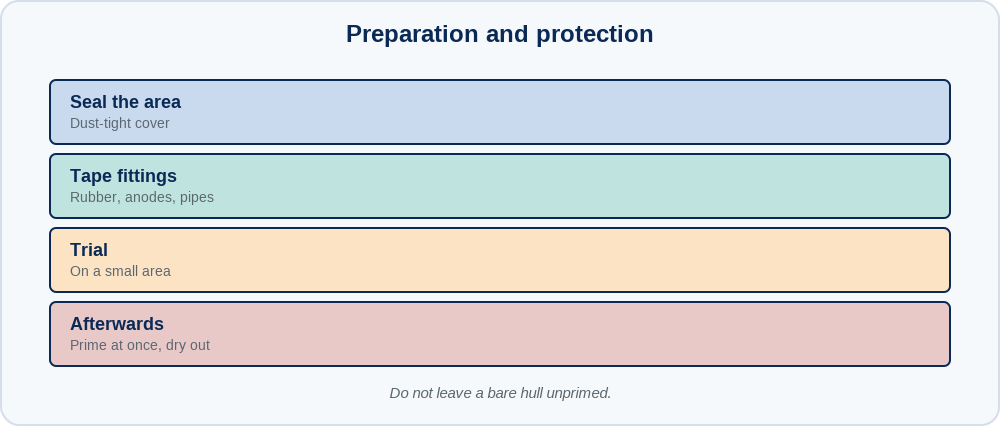
YACHT magazine describes the vessel being packed dust-tight before blasting and the gelcoat at the waterline protected with robust adhesive tape. Generally the following matter: covering the area and collecting waste, protecting or removing rubber parts, anodes, pipes and valves, adjusting pressure and media to the hull and testing on a small area. A blasting service’s case study says it normally recommends about 70 psi for fibreglass but on a particular 54-foot boat job it worked wet and at higher pressure; that is a service provider’s claim, so set the pressure on your own boat with the applicator.
Do not leave a bare hull sitting after blasting: 48 North advises finding a low-temperature curing primer and not letting a bare hull sit without at least one coat of primer. In osmosis repair the hull must be dried and moisture measured; see the related articles. For waste management blasting waste and wash water must also be collected and assessed.
- Assess hull material and gelcoat thickness.
- Define the aim: only paint, down to gelcoat or to bare laminate?
- Choose the media (on fibreglass usually soda or wet); find an experienced applicator.
- Seal the area; protect fittings and waterline gelcoat.
- Trial on a small area.
- After blasting inspect the hull, dry it and prime at once.
- Collect and dispose of the waste.
6. Common mistakes#
- Using dry sand on fibreglass.
- Blasting a thin-gelcoat boat.
- Working with an inexperienced applicator.
- Not doing a small trial.
- Not protecting fittings and the waterline.
- Leaving a bare hull unprimed.
- Not planning for waste and wash water.
7. Checklist#
8. Conclusion#
Blasting can remove old paint quickly but media choice is critical on fibreglass hulls: dry sand is mostly for steel and aluminium, soda and wet blasting are gentler options for gelcoat and the evidence for dry ice is limited. On thin-gelcoat boats even soda can be risky. An experienced applicator, a small trial, protection and priming at once are the basis of a successful job. This article is general information; maker and expert opinion come first.
Frequently asked questions#
Can I sand blast a fibreglass boat?
Dry sand blasting is not recommended since it will wear the gelcoat; Sail Magazine and Graco describe soda and wet blasting as gentler options for gelcoat.
Does soda blasting damage gelcoat?
Although soda is a gentle media Sail Magazine says it can still do serious damage to gelcoat if poorly handled and is not advised on boats with very thin gelcoat.
Does dry ice blasting work on a hull?
Forum experiences conflict: one writes antifouling was removed without marking the gelcoat while others say it is slow and expensive or needs a trial first.
What is used on steel and aluminium?
Cruising World says steel and aluminium hulls can generally stand up to sand blasting.
What should be done after blasting?
Do not leave a bare hull unprimed; 48 North advises at least one coat of primer on a newly bared hull.
Was this guide helpful?
Thank you! Your feedback has been saved.
Guide content is for general information; in practice, the current technical data sheet of the product applies.
Keep reading
Related guides
Boat Colour Selection and Solar Reflectance: Effect of Heat Absorption on Surfaces
A study of the effect of boat paint colour on solar reflectance and surface temperature.
2 min read Paint and CoatingsCauses and Diagnosis of Paint Blistering
A study of the sources, types and diagnostic approach to blistering on boat paints.
2 min read Paint and CoatingsNumber of Coats in Epoxy Coating Systems
A study of the effect of the number of coats in epoxy coating systems on protective performance and thickness.
2 min read