
Paint and Coatings
Silicone, Polyurethane and MS Polymer Sealant Comparison
Silicone, polyurethane and MS polymer sealants are described in sources with different strengths and weaknesses; the choice depends on surface, location and need to disassemble or paint. This article summarises the accounts with their limits; it is not a product, ratio or time recommendation.
Short answer
A boating magazine writes that silicone is primarily a sealant, a flexible sunlight-resistant gasket, not a glue; a boat-maintenance magazine says polyurethane is more of an adhesive, recommended for permanent bonding. A test publication writes polyurethane can be painted while silicone can inhibit bonding in later projects. A public building guide describes MS polymers as a newer class combining some strengths of silicone and polyurethane. A retailer says to check the technical data sheet for compatibility; a maker’s comparison guide gives cure and strength values for its own products. This article recommends no product; the maker governs.
Key points
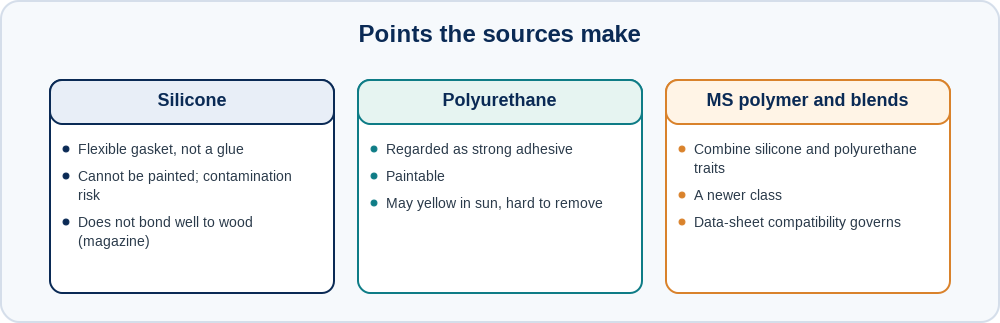
- Silicone is described as a flexible gasket and polyurethane as a strong adhesive; MS polymers are a newer class combining traits of both.
- Polyurethane is paintable; silicone is not and can inhibit bonding in later work.
- Silicone does not bond well to wood; polyurethane is described as better for wood (magazine).
- The wrong chemistry can damage plastics; compatibility should be confirmed from the data sheet (retailer).
- For product and time the maker and a qualified yard govern.
1. Why are sealant types confused?#
Boat sealants are used for different jobs such as bedding, seams, sealing and bonding, and the same word covers both sealing and adhesive products. A boating magazine therefore writes that choosing the right product takes research. This article is a general summary; it gives no product, ratio, cure time or time and is not application advice. Sources are magazine, test publication, retailer and maker accounts and may differ; maker and seller statements are labelled.

2. Silicone, polyurethane and polysulfide#
A sailing magazine writer says polyurethane caulk is terrific but there are times when polysulfide or silicone may be preferable, that unlike polyurethane polysulfide does not dry to a hard eraser-like consistency and stays flexible for years, and that choosing between polyurethane and polysulfide should start by asking whether the object must be disassembled at least during ownership or whether an adhesive is needed. The same writer adds that silicone has a less-than-enviable reputation in the marine industry and that this is somewhat undeserved.
| Type | Sources’ general account | Caution |
|---|---|---|
| Silicone | Flexible gasket; not a glue | Unpaintable; weak on wood |
| Polyurethane | Strong adhesive; paintable | May yellow in sun, hard to remove |
| MS polymer | Combines silicone and polyurethane traits | Data-sheet compatibility |
3. Test, guide and maker accounts#
A test publication writes that 3M 5200 polyurethane is a strong adhesive with the highest tensile strength of the products tested, usable above and below the waterline and paintable like most polyurethanes. In another article it says the acetic-acid type of silicone is corrosive to metals so the ammonia-based type is preferred, and non-marine silicones can contain additives not suited to marine use. A further test article writes a silicone-containing product repelled dirt while polyurethane sealants attracted it, the downside of silicone being that it can inhibit bonding in subsequent projects.
A boating magazine article from 2013 describes polyether sealants as a new class found in only a few marine-store brands and says that beyond portlights and special uses you save yourself grief by keeping silicone away from deck and hull. A British boating magazine writes that silicone is inorganic and polyurethane organic, so polyurethane responds more to UV and breaks down in time, that silicone does not bond well to wood while polyurethane dries hard and is better for sealing wood but can be difficult to apply, that chemicals can be added to polyurethane to raise UV resistance and that silicone is much more expensive.
A building-materials guide writes that MS polymer hybrids are relative newcomers, with silyl chains modifying silicone and polyurethane and combining some strengths of each; it adds that polyurethanes can be painted unlike silicones. A retailer writes that polyurethane and polysulfide have been the traditional formulas with a long work time and high strength, that new modified polymers are good options but it is critical to check the technical data sheet for compatibility, and that using the wrong chemistry can permanently damage plastic windows, hatches and fittings.
A maker’s comparison guide lists chemical base, cure time, tack-free time and strength for its own products; that is a maker’s document, covers only its own products and is not an independent test, so these values should not be read as general class properties.
Users differ too: some find silicone suitable for removable hardware that needs a soft seal; some boat painters advise not using silicone on a boat because of repainting and rebedding problems. These are user opinions, not independently verified and vary by boat.
4. A practical frame#
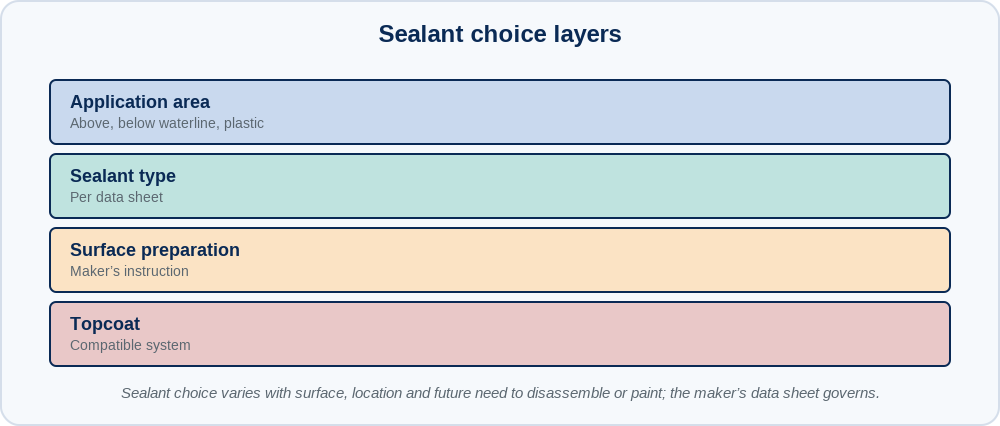
- Define the job: bedding, seam, sealing or permanent bonding; will it be disassembled later?
- Identify the surfaces: fibreglass, wood, metal, plastic; confirm compatibility from the data sheet.
- Think about topcoat needs; where painting or varnishing is planned, allow for silicone contamination risk.
- Separate seller and maker claims from independent test accounts.
- Plan preparation and application per the maker’s instruction.
- Plan regular inspection.
- Keep records; read the safety data sheet.
5. Limits#
Sources overlap that silicone is a flexible gasket, polyurethane a strong adhesive and surface compatibility must be confirmed from the data sheet; they differ on which type suits which job and on lifespan. Maker and seller accounts are specific to their products. So there is no single right answer; the job, surface and the maker’s instruction govern. This article is not application advice.
5b. Where sources differ#
One magazine praises polysulfide and says polyurethane hardens like an eraser; another finds polyurethane better for wood; a building guide describes MS polymers as a newer class; a maker’s guide gives values for its own products; users hold opposite views on silicone. These are sources speaking in different contexts and with different interests. The difference means consulting the maker and a qualified yard for your own job.
This article is general information; it recommends no product, method, ratio, number of coats or time. The maker’s data sheet and a qualified yard govern.
5c. A practical frame for reading the sources#
The sources are magazines, makers, sellers and forums; each writes in its own context. None knows the surface, location or need to disassemble and paint of your boat. So taking the shared message and consulting the maker and a qualified yard for detail is reasonable.
Sealants, solvents and surface-preparation chemicals can carry skin and respiratory irritation or allergic risk; removal work carries injury risk. This article describes no personal protection, ventilation or waste method; read the product’s safety data sheet, consult a qualified yard and follow the relevant safety rules. For a safety-critical place such as a hull-deck joint or seacock apply to a qualified specialist.
Seller and maker statements are the firm’s own account of its product and have not been independently verified. A product’s compatibility with another coating should always be checked in the product’s technical document; where a document and a guide conflict, the maker’s document and a qualified yard’s assessment should be used. Recording decisions and product details helps later maintenance.
6. Common mistakes#
- Choosing a sealant on brand or price alone.
- Not confirming surface compatibility from the data sheet.
- Using silicone near surfaces to be painted.
- Mixing up adhesive and sealing products.
- Treating a maker claim as an independent test.
- Not reading the safety data sheet.
- Keeping no records.
7. Checklist#
8. Conclusion#
Silicone, polyurethane and MS polymer sealants are described in sources with different strengths; the choice depends on the job, surface and need to paint or disassemble. This article is general information; it gives no product or time and the maker and a qualified yard govern.
Frequently asked questions#
What is the main difference between silicone and polyurethane?
Sources describe silicone as a flexible gasket and polyurethane as a strong adhesive; the choice depends on the job and need to disassemble.
Will paint stick over silicone?
Sources describe silicone as unpaintable and able to complicate later paint or varnish work; hence warnings about using it near surfaces to be painted.
What is MS polymer?
A building guide writes MS polymers are silyl-modified, a newer class combining some strengths of silicone and polyurethane.
Does polyurethane degrade in sun?
One magazine writes polyurethane can yellow in sun, another that UV resistance can be increased with additives; it varies by product.
Which sealant on plastic?
A retailer writes the wrong chemistry can permanently damage plastic windows and fittings; the data sheet and maker govern.
Was this guide helpful?
Thank you! Your feedback has been saved.
Guide content is for general information; in practice, the current technical data sheet of the product applies.
Keep reading
Related guides
Boat Colour Selection and Solar Reflectance: Effect of Heat Absorption on Surfaces
A study of the effect of boat paint colour on solar reflectance and surface temperature.
2 min read Paint and CoatingsCauses and Diagnosis of Paint Blistering
A study of the sources, types and diagnostic approach to blistering on boat paints.
2 min read Paint and CoatingsNumber of Coats in Epoxy Coating Systems
A study of the effect of the number of coats in epoxy coating systems on protective performance and thickness.
2 min read