
Joinery and Woodwork
Teak Deck Care: Cleaning, Oil, Sealer and Varnish Choice
Teak is among the most beautiful and most expensive deck materials; it is also among the materials that wear away fastest with wrong care. This guide explains how to clean a teak deck without damaging it and how to choose between oil, sealer and varnish.
Short answer
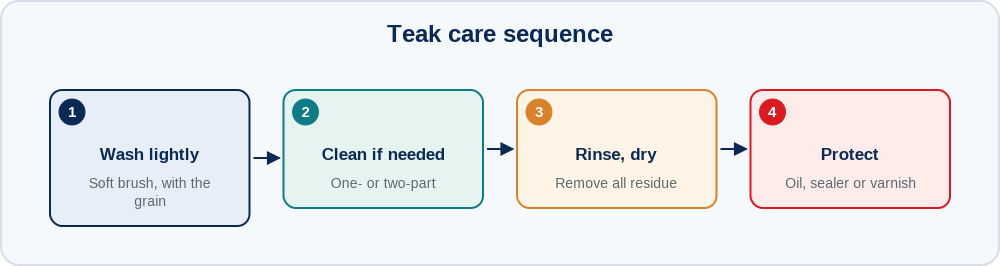
Teak deck care has three steps: light washing, cleaning and brightening if needed, then protection. According to sources, cleaning is the stage when teak is most likely to be damaged; pressure washers, stiff brushes and harsh chemicals can wear away the soft grain and leave a washboard surface. For protection oil, sealer or varnish can be chosen; oil gives a warm, natural look but needs frequent renewal, varnish is glossier and more durable but takes more work. Two-part cleaners are powerful but can affect gelcoat, paint, anodised aluminium and chrome. This article is a general guide; product instructions come first.
Key points
- Cleaning is the stage when teak is most likely to be damaged; avoid pressure washers and stiff brushes.
- Light cleaning with a soft brush along the grain is the safest start.
- Two-part cleaners are powerful and can harm surrounding surfaces, gelcoat and metals.
- Oil, sealer and varnish offer different balances of look, durability and effort.
- Light sanding once a year is cited as standard practice; some experts advise every two years.
1. Why does teak need special care?#
Teak is a wood famed for durability, used on decks, covering boards, swim platforms, ladder rungs and trim. Even so, used outdoors it needs regular care: sun turns it grey, salt and dirt stain the surface and water in time hollows out the soft part of the grain. The real difficulty of this care is that the intervention itself can wear away the wood.
This guide explains the three steps of teak deck care: light cleaning, stronger cleaning and brightening if needed, then protection. The sources range from boating associations and marine magazines to product makers and expert applicators; there are conflicting views among them and the text notes them. Product instructions and, if needed, a boat carpenter’s view always come first.
2. The biggest risk: cleaning#
A boat-owners’ association guide says, ironically, that cleaning is when teak is most likely to sustain damage. Improper or overaggressive cleaning with pressure washers, stiff-bristle brushes or harsh chemicals can remove the soft, lighter-coloured grain and create a washboard effect on the surface. A marine publication gives the same warning: teak is very expensive and if you damage it the way back is sanding, which works by thinning the teak.
One captain therefore champions light cleaning and keeping the deck dry. In his view two-part cleaners do not get the dirt out, they scrub away the teak itself; the aim is to keep the wood and the seams in good condition. This view may not suit every boat; but in cleaning “less” is usually safer.
- Use a soft (nylon) brush and work along the grain.
- Avoid stiff-bristle brushes and pressure washing.
- Try the lightest method first; step up only if needed.
- Dilute chemicals and test on a small area.
- Protect surrounding surfaces (gelcoat, paint, aluminium, chrome) and rinse well.
3. Cleaners: one-part and two-part#
Teak cleaners fall into two main groups. One-part cleaners mostly contain oxalic acid; they are milder than two-part ones but may need longer dwell time, several applications or more effort. One source says even badly weathered teak should come up reasonably well with a one-part cleaner and, when dry, should be a uniform light tan. With any cleaner containing acid, rubber gloves and eye protection are advised.
Two-part cleaners are very effective; the first part is a strong caustic, the second usually an acid. A boating association says they dramatically restore the colour of soiled, stained and neglected teak but should be used only when gentler methods are not enough. Another publication calls them the “nuclear option”. As product instructions themselves note, these products can cause chemical burns on skin and eyes, can damage other materials in the work area, lift paint and varnish, mar fibreglass, destroy anodising on aluminium and etch chrome fittings. Unwaxed gelcoat can also be etched.
A state agency’s clean marina guide, when using two-part caustic/acid cleaners and bleaches, advises diluting the chemicals with water to reduce “burning away” of the teak, testing small sections at various dilutions and choosing the weakest solution that achieves the look you want. This approach protects both the teak and the environment.
| Method | Strength | Risk |
|---|---|---|
| Soft brush and water | Safest; does not harm the grain | May not remove heavy stains |
| One-part (oxalic acid) | Moderate strength; enough for many stains | Acid; gloves and eye protection needed |
| Two-part (caustic + acid) | Very effective; colour returns | Can affect teak, gelcoat, paint and metals |
| Pressure washing / stiff brush | Fast | Wears away soft grain; washboard surface |
4. Sanding: yearly or every two years?#
Experts differ on sanding. One marine magazine says sanding the deck and covering boards once a year is standard practice for fresh-looking teak, adding that a good sanding can be better for the deck’s longevity than a two-step cleaner because the hard and soft grain are taken down evenly. The same source suggests 120-grit wet/dry paper or a sanding sponge for a light sanding.
By contrast a captain favours light cleaning, keeping it dry and light sanding only every two years; another professional favours light sanding every year or two because the seam compound rises as the deck wears. The same professional says that with proper cleaning and regular maintenance a teak deck should last 15 to 20 years before replacement. This figure is an expert opinion and varies with teak thickness, use and climate.
The common ground: sanding must be light, the surface taken down evenly and it must be remembered that a thin layer of teak is removed each time. The remaining thickness of the deck is limited; every sanding reduces it.
5. Protection: oil, sealer and varnish#
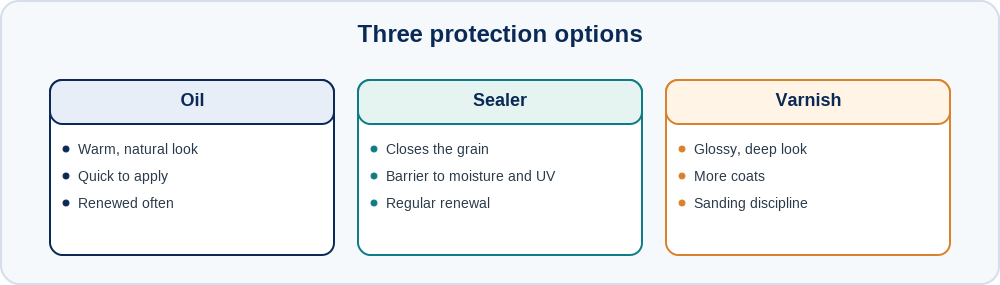
For the natural beauty of the wood to show, a clear coating is needed; the choices are oil, sealer or varnish. A marine retailer says teak oil gives exterior teak a warmer, more natural look without the high gloss, intensive sanding schedule and multi-coat build that varnish requires. It also says oil and sealer are often confused but are not the same.
A product maker says of varnish that it highlights the grain, protects against UV and moisture and maintains teak’s golden colour; it is more durable than oil and sealer, though some traditional varnishes need the first coats thinned, sanding between coats and many coats. These claims come from a manufacturer, so verify them with your own experience and independent tests when choosing a product. One guide suggests 320-grit sanding between varnish coats and allowing each coat at least three nights to dry before overcoating.
A sealer closes the grain and prolongs the wood’s natural look. One guide suggests washing sealed wood and applying a fresh coat of sealer every two to three months; this varies with product and intensity of use. Whichever you choose, apply it when the surface is completely dry and follow the manufacturer’s instructions.
| Option | Look | Effort | Note |
|---|---|---|---|
| Oil | Warm, natural, matt | Low; renewed often | Not the same as sealer |
| Sealer | Natural, closes the grain | Medium; regular renewal | Barrier to moisture and UV |
| Varnish | Glossy, deep | High; many coats, sanding | UV and moisture protection; harder to repair |
6. Seams, gelcoat and walking barefoot#
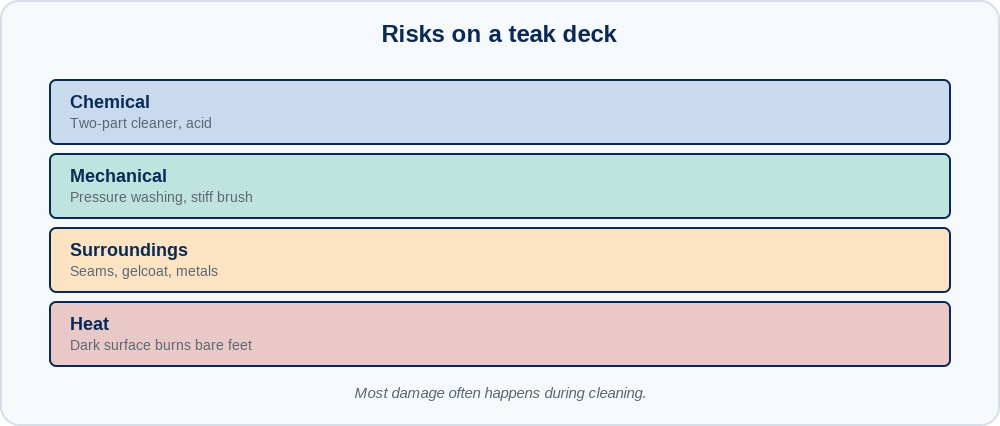
A teak deck is not only wood; there is seam compound between the planks. One applicator describes a mixture that made the wood look nice but damaged the rubber seams and never fully dried; the dark colour was also brutally hot on bare feet. This shows the importance of counting seam compound and the colour-heat effect when choosing a product. An expert notes that the seam compound rises as the deck wears, which is why a light sanding is needed.
The effect of cleaners on gelcoat and surrounding surfaces should not be forgotten either. Unwaxed gelcoat can be etched by some cleaners. Masking surrounding surfaces before starting deck care and rinsing everything with plenty of water at the end reduces this risk. Where teak meets painted surfaces remember that teak cleaner can harm paint; prefer diluted, gentle methods there.
7. A simple care plan#
- Weekly or after use: wash with plenty of fresh water, soft brush, along the grain.
- Monthly: a light one-part cleaner or soapy wash if needed.
- Yearly: visual inspection, light sanding (120 grit) if needed and seam check.
- Protection: follow the manufacturer’s renewal interval for your chosen oil, sealer or varnish.
- Record: work done, product used, date and photograph; monitor the change in teak thickness.
8. A short case: the same deck, two approaches#
On two teak decks of the same age the first owner uses pressure washing and a two-part cleaner every spring; the deck looks wonderful in the first year. Within a few years the grain stands out, the seam compound rises above the surface and the deck turns wavy. The second owner chooses light washing with a soft brush, sands lightly with 120 grit once a year and uses a sealer for protection; the look is a little less “new” but the deck stays flat.
This is not an experiment but an example of the cost of overdoing cleaning. Real results vary with teak thickness, climate and use.
9. Checklist#
10. Common mistakes#
- Cleaning with pressure washing and stiff brushes.
- Using a two-part cleaner undiluted and untested.
- Not protecting and rinsing surrounding surfaces.
- Over-sanding and reducing teak thickness.
- Thinking oil and sealer are the same thing.
- Not testing a dark mixture’s seam and heat effect first.
11. Conclusion#
The safest route in teak deck care is light cleaning, a measured cleaner when needed, light sanding and a suitable protectant. Use chemicals and sanding sparingly, protect surrounding surfaces, watch the seams and record everything you do. This guide is a general framework; your product’s instructions and, if needed, a boat carpenter’s view always come first.
Frequently asked questions#
Can a teak deck be pressure washed?
According to sources pressure washing, stiff brushes and harsh chemicals can wear away the soft grain and leave a washboard surface. A soft brush and light washing along the grain is preferred.
Is a two-part cleaner safe?
It is powerful but harsh: one source calls it the “nuclear option”. It can etch gelcoat, lift paint and varnish and affect anodised aluminium and chrome. Dilute it, test on a small area and protect surfaces.
Teak oil, sealer or varnish?
Oil gives a warm, natural look and is easy to apply; varnish gives a glossy, deep look with UV and moisture protection but needs more coats and sanding. Sealer closes the grain; it needs renewal.
How often should teak be sanded?
One source cites light sanding once a year as standard; another expert prefers light cleaning and light sanding every two years. Seams and teak thickness are decisive.
Are dark mixtures good for teak?
One applicator says a dark mixture damaged the seams, never fully dried and burned bare feet. Test product and seam compatibility first.
Was this guide helpful?
Thank you! Your feedback has been saved.
Guide content is for general information; in practice, the current technical data sheet of the product applies.
Keep reading
Related guides
Choosing Antifouling: A Decision Based on Usage Profile
A decision-focused study explaining how the type of antifouling should be chosen according to the frequency of use and water conditions.
2 min read Paint and CoatingsBoat Colour Selection and Solar Reflectance: Effect of Heat Absorption on Surfaces
A study of the effect of boat paint colour on solar reflectance and surface temperature.
2 min read Paint and CoatingsCauses and Diagnosis of Paint Blistering
A study of the sources, types and diagnostic approach to blistering on boat paints.
2 min read