
Paint and Coatings
Using Zinc-Rich Primer on Steel Boats
A zinc-rich primer is a protective layer often mentioned for steel boats; but it does not suit every system and must not be confused with zinc phosphate. This article summarises maker, body and forum accounts with their limits; it is not a product, coat-count or time recommendation.
Short answer
A Carboline product description says a high-build zinc-rich primer provides galvanic protection for steel in industrial and marine environments (maker). Hempel (maker) presents a two-component zinc-rich epoxy primer as a long-term primer on steel for epoxy, vinyl and acrylic systems in medium to severely corrosive environments. A NACE account of ship coating says an inorganic zinc primer followed by two coats of epoxy performs well in harsh zones. US-published military research reports say that in ship construction the inorganic zinc pre-construction primer on the underwater hull is conventionally removed by abrasive blasting before final coating to avoid blistering and disbondment of the topcoat. This article is general information; product and coat count vary by maker.
Key points
- A zinc-rich primer is described as a layer giving galvanic protection to steel (maker).
- A two-component zinc-rich epoxy is presented as a long-term primer with epoxy, vinyl and acrylic systems (Hempel, maker).
- In ship coating an inorganic zinc primer followed by epoxy coats is described (NACE); ask the maker for a yacht.
- A zinc phosphate primer is not the same as a zinc-rich primer (seller and maker accounts).
- In ship construction the inorganic zinc shop primer is conventionally removed underwater before final coating (military research reports).
1. What does a zinc-rich primer describe?#
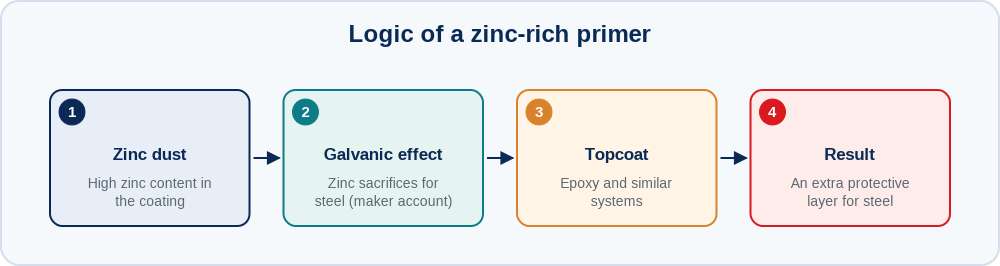
A zinc-rich primer is a coating containing a high proportion of zinc dust that is described as giving steel galvanic protection. A Carboline product description presents a high-build zinc-rich primer as providing galvanic protection for steel in industrial and marine environments; that is a maker claim and has not been independently verified. A FAO document lists coating steel with zinc among the ways of protecting it. This article is a general summary; it gives no product, coat count, thickness or waiting time and is not application advice. Some sources are maker, seller or forum accounts and are labelled as such.
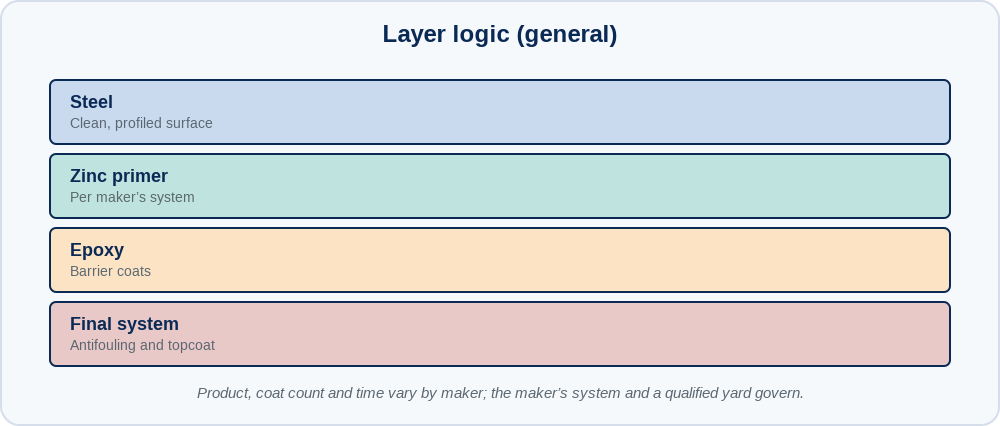
A zinc-rich primer is not a sufficient system by itself on a steel boat; sources generally describe it together with an epoxy or similar topcoat system. So the word “primer” here means part of a larger system; for surface preparation and the general system see the steel boat painting article.
2. Types: zinc-rich epoxy, inorganic zinc and zinc phosphate#
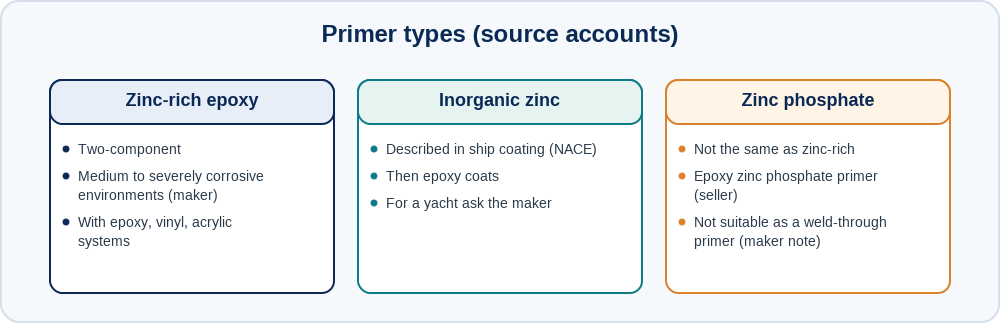
Hempel (maker) presents a two-component zinc-rich epoxy primer as a versatile long-term primer on steel for epoxy, vinyl and acrylic coating systems in medium to severely corrosive environments; the same maker describes another product as a one-component, quick-drying phenoxy coating with high zinc content for repair of zinc-rich coatings or galvanised steel. A NACE account of ship coating says an inorganic zinc primer followed by two coats of epoxy performs well in harsh zones. These are different product families described in different contexts.
Zinc phosphate is a different product from a zinc-rich primer. Rawlins (seller) presents a two-pack epoxy zinc phosphate primer as recommended for blast-cleaned steel, aimed at high corrosion resistance in marine environments, and notes that it is not suitable as a weld-through blast primer. That is a seller claim; the similarity of the two product names can cause confusion, so the label and data sheet should be read.
| Type | Sources’ general account | Caution |
|---|---|---|
| Zinc-rich epoxy | Two-component; medium to severely corrosive environment (Hempel, maker) | Compatibility with topcoat |
| Inorganic zinc | In ship coating, then epoxy coats (NACE) | Ask the maker for a yacht |
| Zinc phosphate | Not zinc-rich; epoxy zinc phosphate (seller) | Not suitable as a weld-through primer |
3. Shop primer and underwater in ship construction#
US-published military research reports say that in ship construction hull plate is commonly protected by an inorganic zinc shop primer which protects the steel during fabrication, and that after fabrication it has been the usual practice to remove this primer on the underwater hull by abrasive blasting before final coating; the aim is to avoid blistering and disbondment of the topcoat. The same reports say that if the removal requirement could be eliminated there would be a significant cost saving. These are research reports in a ship-construction context; for a yacht the maker’s system governs and this article recommends no method.
A forum user (2022) writes of planning to apply a zinc-loaded moisture-cure urethane above and below the waterline on a freshly blasted steel boat and of concern about the effect of zinc-loaded paint on hull protection anodes and the reverse. That is a question and the sources here give no firm answer; anodes and coating should be considered together and the maker and a qualified yard consulted. Another forum user in a 2001 account relays using a weldable rust-retardant primer before welding and, after a final blast, an organic zinc; that is a user account.
4. A practical frame#
- Establish the boat’s existing coating and the condition of the steel.
- Find out the system the maker recommends for steel and the place of zinc primer in it.
- Do not mix zinc-rich and zinc phosphate products; read the label.
- Prepare the surface by the maker’s method.
- Apply the primer and topcoats within the window and plan in the data sheet.
- Discuss interaction with anodes with the maker.
- Keep records; read the safety information sheet.
5. Limits#
Sources largely agree a zinc-rich primer is described as giving galvanic protection on steel; differences lie in this primer’s place in a yacht system and its interaction with other layers. In ship construction removing the shop primer underwater has been the practice; a maker presents zinc-rich epoxy as a long-term primer. So there is no single right answer; the maker’s system and a qualified yard’s assessment govern. This article is not application or engineering advice.
5b. Where sources differ#
Hempel (maker) describes zinc-rich epoxy as a long-term primer for steel; NACE (ship context) describes an inorganic zinc primer and epoxy coats; the military research reports describe the inorganic zinc shop primer being conventionally removed underwater in ship construction; Rawlins (seller) presents a zinc phosphate product in another category. These sources speak in different contexts and with different interests. The difference means looking at the maker’s full system recommendation for a yacht; a ship practice cannot be transferred directly to a yacht.
This article summarises the sources’ general accounts; it may not hold for a particular boat. For product, coat count and time the maker’s data sheet and a qualified yard govern.
5c. A practical frame for reading the sources#
The sources are makers, a seller, a professional body, military research reports and a forum; each writes in its own context. Makers describe their products, the military reports ship-construction practice and forum users personal experience. None knows your boat’s coating history, plate thickness or berthing conditions. So taking the shared message, that a zinc-rich primer is described as a protective layer for steel but is part of a system and must not be confused with zinc phosphate, and consulting the maker for detail, is reasonable.
If the type of the existing coating is unknown, applying a new system over it carries a risk of incompatibility. This article proposes no test or method for that; consult the maker and a qualified yard on compatibility. Zinc-containing primers and steel preparation can produce dust and fumes, and some coatings may need special health and safety precautions. Read the product’s safety information sheet and consult a qualified yard.
Finally, a primer alone is not the solution; the anode system, drainage, ventilation and regular inspection should be considered together. If you see blistering or rust bleeding consult a specialist. Recording decisions and keeping the maker’s instruction helps later maintenance.
In addition, seller and maker statements are the firm’s own account of its product and have not been independently verified. A product’s compatibility with another paint should always be checked in the product’s technical document; where a document and a guide conflict, the maker’s document and a qualified yard’s assessment should be used.
6. Common mistakes#
- Confusing zinc-rich and zinc phosphate primer.
- Transferring ship practice directly to a yacht.
- Choosing a topcoat without checking the maker’s system.
- Not asking about interaction with anodes.
- Cutting surface preparation short.
- Not reading the safety information sheet.
- Keeping no records.
7. Checklist#
8. Conclusion#
A zinc-rich primer is described as a galvanic protection layer on steel and is part of a system; it must not be confused with zinc phosphate and ship-construction practice must not be transferred directly to a yacht. This article is general information; it gives no product, coat count or time, and the maker’s system and a qualified yard govern.
Frequently asked questions#
What is a zinc-rich primer?
A Carboline product description presents a high-build zinc-rich primer as providing galvanic protection for steel in industrial and marine environments. That is a maker claim.
Are zinc-rich and zinc phosphate the same?
No; Hempel presents a zinc-rich epoxy and Rawlins an epoxy zinc phosphate primer as different products. This article bases the distinction on the sources’ accounts.
Is it suitable for every steel boat?
Hempel (maker) presents it for medium to severely corrosive environments; suitability for a yacht depends on the boat, the existing coating and the topcoat system. Ask the maker.
Is it used together with anodes?
A forum user asks about the effect of zinc-loaded paint on hull anodes and the reverse; the sources here give no firm answer. Ask the maker and a qualified yard.
Why is the shop primer removed on ships?
US-published military research reports say that underwater it is removed by blasting before final coating to avoid blistering and disbondment of the topcoat. That is a ship context.
Was this guide helpful?
Thank you! Your feedback has been saved.
Guide content is for general information; in practice, the current technical data sheet of the product applies.
Keep reading
Related guides
Boat Colour Selection and Solar Reflectance: Effect of Heat Absorption on Surfaces
A study of the effect of boat paint colour on solar reflectance and surface temperature.
2 min read Paint and CoatingsCauses and Diagnosis of Paint Blistering
A study of the sources, types and diagnostic approach to blistering on boat paints.
2 min read Paint and CoatingsNumber of Coats in Epoxy Coating Systems
A study of the effect of the number of coats in epoxy coating systems on protective performance and thickness.
2 min read