
Refit and Maintenance
Varnish and Lacquer Work: Coat Count, Intercoat Sanding and UV Resistance
The bright surface of a wooden boat is not only appearance; it is armour that protects the wood from sun and moisture. Varnish and lacquer work is the building of that armour layer by layer.
Short answer
Varnish and lacquer work means applying clear protective layers to wood in a clean, dry environment, in a defined number of coats, with controlled sanding between them. UV resistance comes from additives, coat count and regular renewal.
Key points
- The life of varnish and lacquer depends on the number of UV protective layers.
- Intercoat sanding gives adhesion and evenness between coats.
- Application in sunny or humid conditions causes bubbles and dull patches.
- The date, product and conditions of each coat are recorded.
The job of the bright surface#
Wooden parts on a boat, such as deck fittings, hatches and cabin panels, break down quickly under the ultraviolet rays of the sun. These rays break down the fibres of the wood and leave the surface grey and brittle. Varnish and lacquer are clear protective layers that stop those rays reaching the wood. They are applied for appearance, but their real job is protection.
Coat count#
Varnish and lacquer do not provide protection in a single coat. Several thin coats do the work of one thick coat. The coat count must match the figure in the product data sheet and the intensity of use. Surfaces exposed to sun get more coats; surfaces in shade may need fewer. Each coat is kept thin; a thick coat runs and may go cloudy as it cures.
| Surface | Sun exposure | Approach |
|---|---|---|
| Deck fittings | High | Many coats, regular renewal |
| Cabin panel | Low | Fewer coats, interior environment |
| Hatch and window surrounds | Medium | Medium coat count, frequent checks |
| Mast and spar | Very high | Most coats, UV-protected product |
Intercoat sanding#
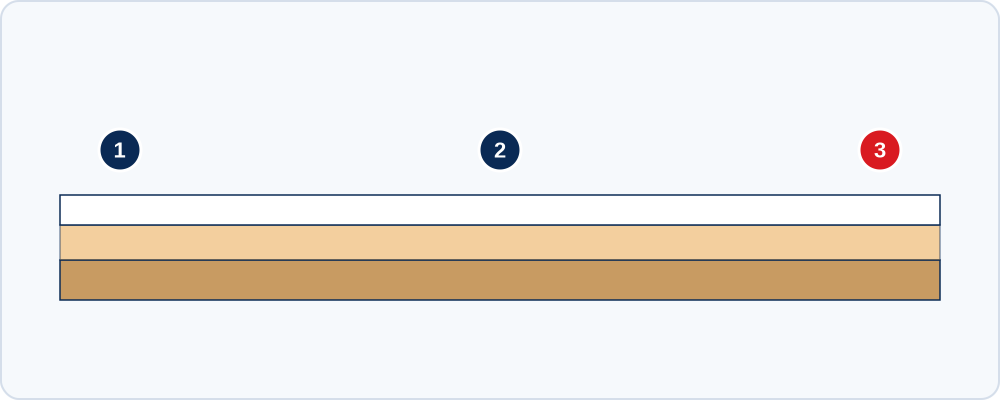
Each coat is lightly sanded once fully dry. This ensures the next coat bonds and corrects small raised areas on the surface. Sanding uses very fine paper, with light pressure so as not to cut the wood fibres or strip the coat completely. Dust is cleaned off after sanding; otherwise it is trapped under the new coat.
UV resistance#
UV resistance is provided by additives. UV-filtered products absorb or reflect part of the light. But no additive takes the place of the protective layer once that layer itself breaks down. For this reason UV resistance is thought of together with regular renewal. When varnish cracks or dulls, the whole surface is sanded again and renewed coat by coat.
Application conditions#
Varnish and lacquer are applied in a cool, dry, windless environment. On a sunny day the surface heats quickly, and the varnish dries too fast and forms bubbles. High humidity slows drying and leaves dull patches. For this reason application is carried out at the most suitable times of the day and the environmental conditions are recorded.
Records and acceptance#
For each coat the product batch, date, coat number and the result of the intercoat sanding are recorded. Acceptance checks the evenness of the surface, the consistency of gloss, and whether bubbles or dull patches are present.
Types of varnish#
Varnishes used on yacht timber fall broadly into two groups. One-pack varnishes cure on contact with air; they are easy to apply, simple to repair and give a classic look, but their resistance to abrasion and chemicals is limited and they need more frequent maintenance. Two-pack varnishes cure by a chemical reaction between resin and hardener; they form a harder, more durable film but are harder to repair and more sensitive to application conditions.
In some places penetrating oils or semi-transparent finishes are chosen instead. These do not build a thick film; they soak into the wood and give a more matt look. They are easy to maintain but protect for a shorter time.
Preparing the wood#
Varnish shows the surface exactly as it is, so preparation decides much of the result. Old varnish is stripped completely or, if sound, sanded as a base for new coats. Wood greyed by sun is sanded back to healthy colour. Water stains and dark marks that have gone deep can be lightened with suitable bleaches, after which the wood is rinsed and dried thoroughly.
On oily woods such as teak, the natural oil can weaken varnish adhesion, so the surface is wiped with a suitable solvent before application. Moisture content is checked too; varnish on damp wood blisters and lifts over time.
First coats and penetration#
The first coats are usually thinned so they soak into the pores and form a bond. Thinned coats penetrate deeper and give a sound base for later ones. Subsequent coats are applied as the manufacturer advises and the film is built up step by step.
Brush technique and dust control#
Varnish is usually applied by brush. It is laid on thinly, then tipped off lightly in one direction to level the surface. The brush is drawn from the edges inward to avoid build-up at the edges. Dust is the greatest enemy: the area is cleaned, the surface wiped with a tack cloth, and no sanding or cutting is done nearby during application.
Damage and maintenance coats#
A small scratch left unrepaired can become a large problem. Water entering at the damage creeps under the varnish and leaves dark stains in the wood that can remain even after stripping. Small damage is therefore cleaned, lightly sanded and recoated as soon as it is noticed. The most effective way to extend varnish life is to add maintenance coats before the film wears through: a light sanding and one or two coats.
How long does varnish last?
It depends on sun exposure, coat count and care. Surfaces given regular maintenance coats look good far longer.
Varnish or oil?
Varnish for a glossy, protective finish; oil for easy care and a natural look. The choice depends on how the wood is used.
Conclusion#
Varnish and lacquer work is the armour of the wood against sun and moisture. The right coat count, controlled sanding between coats and application suited to the conditions keep the bright surface protected for a long time. The next article moves to the interior of the boat: furniture, linings and moisture management.
Was this guide helpful?
Thank you! Your feedback has been saved.
Guide content is for general information; in practice, the current technical data sheet of the product applies.
Keep reading
Related guides
Wooden Hull Refit: Planking, Frames and Recaulking
How are planking, frames and caulking checked and renewed in a wooden boat refit? Rot detection, materials and application principles.
7 min read Refit and MaintenanceTopcoat: Polyurethane Systems, Spray Application and Film Thickness
Why a boat topcoat should be polyurethane, how spray application is done and how film thickness is measured. Principles of colour, gloss and UV resistance.
6 min read Refit and MaintenanceTank Inspection, Maintenance and Repair: Holiday Testing, Thickness Measurement and Records
Inspection, thickness measurement, holiday testing, repair approaches and records for steel boat tanks, summarised from source accounts with their limits.
10 min read