
Paint and Coatings
Anode Choice: Zinc, Aluminium and Magnesium
Zinc, aluminium and magnesium anodes behave differently in different waters. This article summarises the sources’ general view, where they differ and the risks of a wrong choice, keeping maker and seller claims apart.
Short answer
By the sources’ common view zinc is traditionally used in salt water and magnesium only in fresh; aluminium is presented as a wider option usable in salt, brackish and fresh water. Yachting Monthly writes that aluminium is superseding zinc in general use and that zinc oxide formation in fresh and brackish water inhibits zinc’s action; Volvo Penta says magnesium should not be used in salt or brackish water because of over-protection and very high anode consumption. In PBO a professor’s view is that many boaters carry more anode than needed. The right anode depends on the engine and hull maker’s instruction, the water and the hull material; this article recommends no product and is general information.
Key points
- Zinc is traditionally used in salt water, magnesium only in fresh; aluminium is usable across a wider range (Boating, Yachting Monthly).
- Zinc can passivate with an oxide crust in fresh and brackish water (Yachting Monthly, Cruising World).
- Magnesium wastes quickly in salt and brackish water and carries an over-protection risk (Volvo Penta, BoatUS).
- Magnesium suits aluminium hulls in fresh water but in salt water can harm aluminium and paint (Practical Sailor, BoatUS).
- Maker instruction and water type govern; do not mix anode types and review the quantity.
1. What does an anode do?#
A sacrificial anode is a metal more active than the metals to be protected and corrodes in their place. Boating magazine writes that anode choice depends on where the boat is used and that zinc, aluminium and magnesium behave differently in different water environments. Yachting Monthly notes that the voltages of the three commercial anode alloys differ considerably from those of general alloys, which for example allow an aluminium saildrive leg to be protected. This article is a general summary; it recommends no product and some of the source views are seller or maker claims.
The basic inputs to the choice are water conductivity (salt, brackish, fresh), the material of the hull and drive and the maker’s instruction. A boat used in both salt and fresh water makes the choice harder.
2. The three materials: sources’ general view#
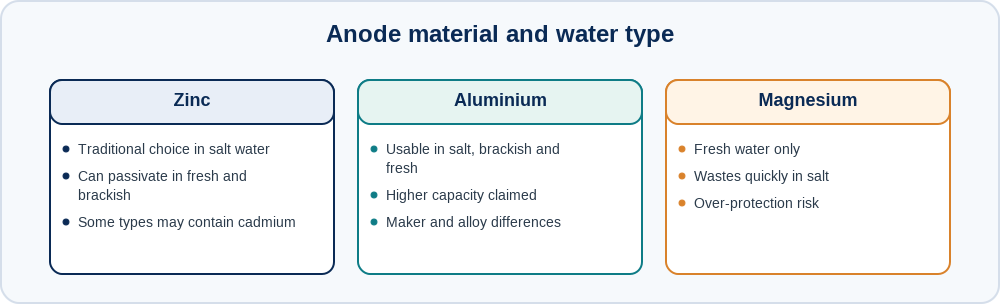
Boating writes that zinc anodes are typically best for boats used in salt water because they are most reactive to seawater’s electrolytes. West Marine lists aluminium or zinc for salt water, aluminium for brackish water and magnesium for fresh water. Yachting Monthly notes that aluminium anodes are superseding zinc in general use and gives reasons: they may be used in both salt and brackish water, their higher electrical capacity allows smaller anodes, their decay is more even across the anode and the formation of zinc oxide in fresh and brackish water inhibits zinc’s action. The same article says magnesium alloys react rapidly in seawater and are only suitable for fresh water.
These are common views but not every source stresses the same points. For example in a hypothetical example in Boating, zinc would last 150 days, magnesium 50 and aluminium 225; this is a hypothetical illustration and not a promise of real life. A supplier quoted in a New Zealand magazine says the big outboard makers dropped zinc for aluminium; that is a supplier’s account and may be regional. Some seller pages say zinc can contain cadmium; cadmium-free products are also sold. So check the maker’s content declaration when choosing a product.
| Material | Sources’ general observation | Caution |
|---|---|---|
| Zinc | Traditional choice in salt water | Can passivate in fresh and brackish |
| Aluminium | Usable in salt, brackish and fresh; high capacity claimed | Maker and alloy differences; review quantity |
| Magnesium | Preferred in fresh water | Wastes quickly in salt and brackish; over-protection risk |
3. Passivation and over-protection#
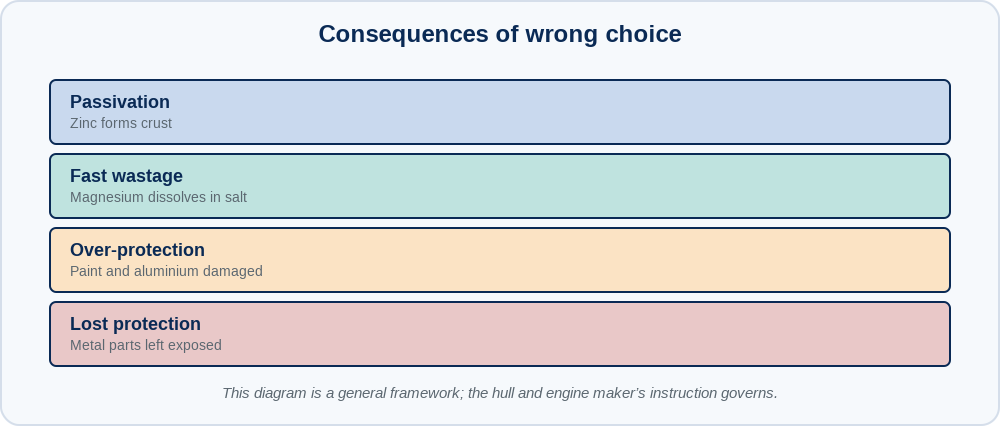
Yachting Monthly and Cruising World write that zinc can develop an oxide coating in fresh and brackish water and effectively go dormant; Cruising World adds that a stiff non-metallic brush can remove the crust but that this may be inconvenient. An expert answer in PBO says zinc develops an oxide crust in fresh or brackish water and that this can insulate the anode even after returning to salt water.
With magnesium the problem is over-protection. Volvo Penta writes that magnesium should not be used in salt or brackish water because of the risk of over-protection and extremely high anode consumption. BoatUS says magnesium can damage bottom paint in seawater and cause cathodic corrosion damage to aluminium. Boating magazine writes that taking a freshwater boat protected by magnesium to the coast and putting it in a slip for a week could be a “catastrophe”. Practical Sailor notes that magnesium alloys are right for an aluminium-hulled boat in fresh water but wrong for others. These are views of a magazine and a maker; on your own boat the maker’s instruction governs.
4. Hull material and mixed-water use#
For boats used in both salt and fresh or brackish water, sources mostly present aluminium as the compromise. West Marine points to aluminium as the best all-round choice for trailered boats used in various waters; Yachting Monthly also writes that aluminium can be used in brackish water. Cruising World calls aluminium “one-size-fits-all”; that is one author’s assessment and may be a generalisation.
Care is needed by hull material: one source says magnesium can over-protect aluminium or wooden hulls and adds that steel hulls can also be over-protected. Mixing anode types may also lead the more active anode to be spent protecting the less active one (maker account). So using one type on a boat and consulting the maker before changing is reasonable.
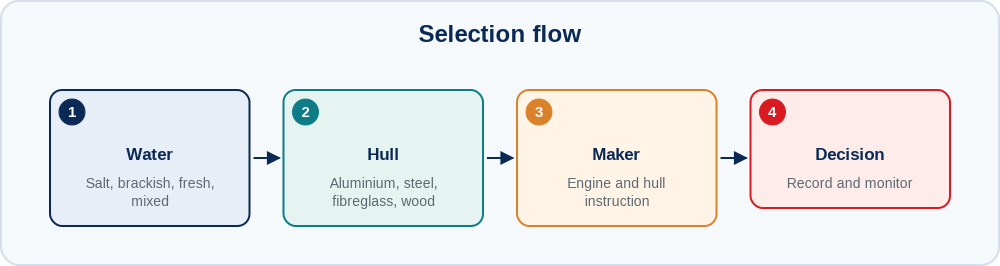
- Identify the water the boat is used in: salt, brackish, fresh or mixed.
- Learn the hull and drive material and the maker’s instruction.
- Record the type and quantity of current anodes.
- Consult the maker before changing type.
- Assess magnesium risk on a freshwater boat that moves to salt water.
- Keep anode contact surfaces clean; do not paint the anode.
- Monitor the anodes and keep records.
5. Quantity: too much or too little?#
In PBO Professor Watson said that besides switching from zinc to aluminium the amount of anode should be reconsidered and that many boats carry more than needed. Yachting Monthly writes that painting the propeller with antifouling has been found to double anode life by reducing the cathode area. Whether anodes are sufficient depends on whether they provide protection until the next chance to replace them. This article gives no quantity or size value; see the anode life article and the maker’s instruction.
According to sources the long life of aluminium anodes can make buyers think they are “not working”; a New Zealand magazine quotes a supplier describing this sales resistance. That is a seller’s account. To know whether an anode that looks new is working, contact and measurement are needed (see the anode life article).
5b. Where sources differ#
Sources agree on most points (zinc salt, magnesium fresh) but differ on some: whether aluminium is preferred in fresh water, whether it is the best choice in brackish water and whether the quantity of anode is sufficient. For example West Marine lists aluminium for salt and brackish water while some sellers say “all waters” and Boating shows magnesium as best for fresh water. The difference may come from alloy compositions, product families and seller approaches. Unless sources say otherwise this article defers to the maker.
The cadmium content and environmental impact of zinc is stressed on some seller pages; Boating writes that aluminium does not release cadmium. These sales and environmental claims are not independently verified; for environmental rules see local regulation and the maker’s declaration.
6. Common mistakes#
- Using zinc in fresh water and assuming it protects.
- Not changing magnesium on a freshwater boat that goes into salt water.
- Mixing anode types.
- Painting the anode or fitting it without cleaning the contact surface.
- Not reading the hull and engine maker’s instruction.
- Adding or removing anode without reviewing the quantity.
- Calling an anode that looks new “good”.
7. Checklist#
8. Conclusion#
Zinc is traditionally used in salt water and magnesium in fresh; aluminium is presented as usable across a wider range. Passivation, over-protection and mixed-water use are the main risks of choice. Maker instruction, water type and hull material govern. This article is general information; it recommends no product or quantity.
Frequently asked questions#
Which anode is used in salt water?
Sources list zinc or aluminium for salt water (West Marine). Yachting Monthly writes that aluminium can be used in both salt and brackish water. See the engine and hull maker’s instruction.
Why magnesium in fresh water?
Fresh water has low conductivity; Boating writes that magnesium works better in that environment. Aluminium may also work but sources recommend magnesium for fresh water. If taken into salt water magnesium wastes quickly.
Why does zinc not work in fresh water?
Yachting Monthly and Cruising World write that zinc can develop an oxide crust in fresh and brackish water and go dormant; a PBO expert says the crust can insulate the anode even after returning to salt water.
Can I mix anode types?
A maker’s account says that when different anode materials are mixed the more active anode may spend effort protecting the less active one; not mixing is advised. See the maker’s instruction.
How can I tell an anode really works?
Per Fisheries Supply an anode that still looks brand new after months is probably not making electrical contact and not protecting; contact surfaces must be clean. See the anode life article for detail.
Was this guide helpful?
Thank you! Your feedback has been saved.
Guide content is for general information; in practice, the current technical data sheet of the product applies.
Keep reading
Related guides
Boat Colour Selection and Solar Reflectance: Effect of Heat Absorption on Surfaces
A study of the effect of boat paint colour on solar reflectance and surface temperature.
2 min read Paint and CoatingsCauses and Diagnosis of Paint Blistering
A study of the sources, types and diagnostic approach to blistering on boat paints.
2 min read Paint and CoatingsNumber of Coats in Epoxy Coating Systems
A study of the effect of the number of coats in epoxy coating systems on protective performance and thickness.
2 min read