
Hull Repair
Interpreting Hull Moisture Readings in an Osmosis Survey
This study examines how moisture readings on yacht hulls with suspected osmosis should be interpreted. It shows why absolute values can be misleading, and argues for relying on relative differences and a dry reference area.
Short answer
Moisture readings should be interpreted by comparison with a dry reference area on the same hull and by relative difference, not by an absolute threshold. Without recording measurement conditions and instrument calibration, a single reading is not sufficient evidence.
Key points
- Meters use different scales; comparing absolute thresholds across instruments is misleading.
- The useful information lies in relative differences between zones on the same hull.
- The reference area and measurement conditions must be recorded with each reading.
- A single high reading without repetition is not a conclusive result.
Abstract#
This study examines how surface moisture readings on yacht hulls with suspected osmosis should be interpreted. Because instruments operate on different scales and ambient conditions influence readings, absolute thresholds are not considered reliable. Relative differences within the same hull and a dry reference area are proposed as the basis of interpretation.
Keywords: moisture measurement, osmosis survey, hull moisture, relative reading, reference area.
1. Introduction#
The moisture meter is the most common rapid tool in osmosis assessment. In practice, however, readings are often reported as a single number whose meaning remains unclear. The question addressed here is how readings should be interpreted within one hull and across different hulls.
2. Theoretical framework#
Surface moisture meters measure electrical or capacitive properties of the laminate, which change with moisture. The measurement is also affected by surface roughness, hull temperature, laminate type and calibration. A raw reading should therefore be treated as a relative indicator rather than a direct moisture quantity.
3. Method#
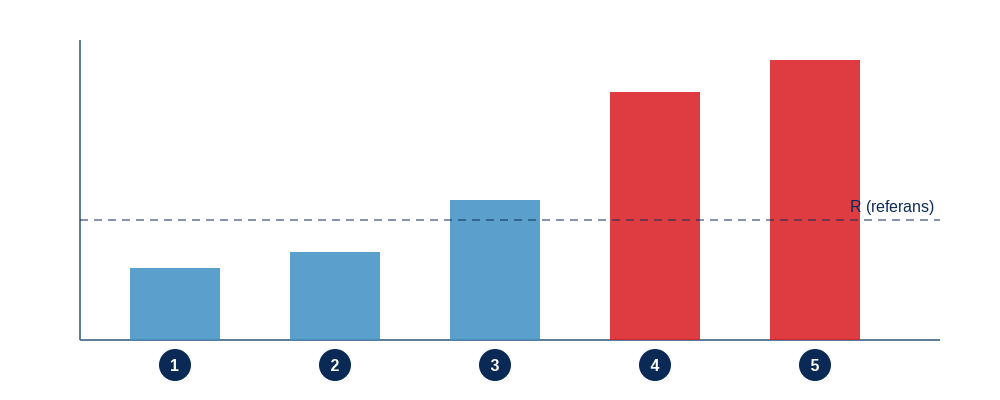
Readings were taken at defined points on the hull, and the surface condition and temperature were recorded for each. Each reading was compared with a reference area considered visually dry. Figure 1 schematically shows the relative reading profile across depth zones.
4. Findings#
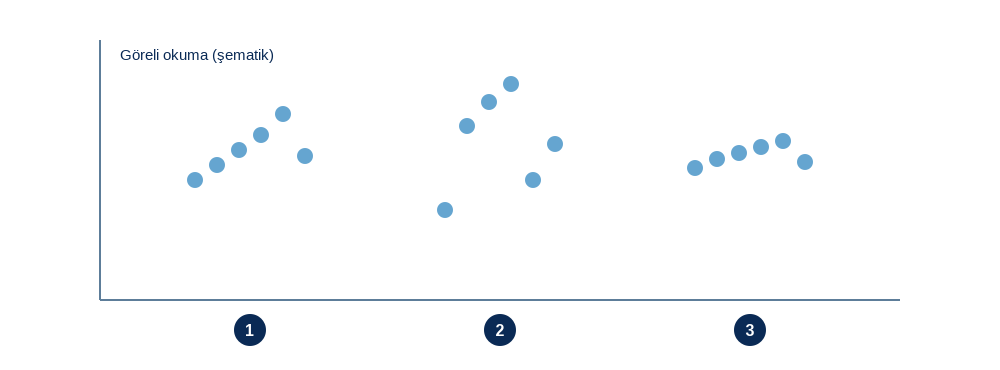
Figure 2 shows the reading distribution of three different instruments at the same points. Although the instrument means differ, each shows a rise relative to the reference area. What matters is therefore the relative increase within each instrument, not absolute values compared across instruments.
| Reading pattern | Possible interpretation | Required next step |
|---|---|---|
| Clearly elevated, clustered relative to reference | Higher likelihood of moisture increase | Section and blister content analysis |
| Similar readings across all zones | General moisture or measurement condition effect | Record ambient and temperature, repeat measurement |
| Scattered and inconsistent readings | Surface or instrument uncertainty | Prepare surface and repeat measurement |
| Single high point | Possible local effect | Confirm at neighbouring points |
5. Discussion#
The findings show that the value of a moisture reading lies in its context rather than the number itself. Comparisons of results from different hulls are not meaningful unless the reference area, measurement conditions and repetitions are recorded.
6. Conclusion#
Moisture measurement is an important component of an osmosis survey, but it acquires meaning only through relative, recorded and repeatable readings. This approach prevents errors based on absolute thresholds and places repair decisions on firmer ground.
Was this guide helpful?
Thank you! Your feedback has been saved.
Guide content is for general information; in practice, the current technical data sheet of the product applies.
Keep reading
Related guides
Salt Residue and Dulling of the Hull: Causes, Cleaning and Prevention
Salt residue holds moisture and minerals against the surface and speeds UV and abrasion damage. We explain what white marks are, how to clean them and how to prevent them.
7 min read Hull RepairBoat Washing Routine: How, How Often and in What Order
Regular, correct washing is the cheapest way to protect gelcoat and paint. Cut scratch and stain risk with a pre-rinse, two buckets, the right soap and drying.
8 min read Hull RepairNano Coating and Boat Protection: What It Promises and How to Judge It
Nano coating products promise hard, water-repellent, long-lasting protection for a boat. Most claims are maker claims; sources say preparation and upkeep decide the result.
8 min read