
Hull Repair
Limits of Moisture Meter Results in Osmosis Detection
This study examines the limits of surface moisture meters in osmosis detection. It shows how instrument, surface and ambient uncertainties affect readings, and argues that results must be supported by repetition and comparison.
Short answer
Moisture meters provide rapid screening but cannot make a definitive detection on their own. Readings vary with the instrument, surface roughness, temperature and calibration; they must therefore be supported by repetition, relative comparison and section inspection.
Key points
- Moisture meters are valuable as screening tools.
- Readings vary with instrument and surface conditions.
- Repeated measurement is the main way to reduce uncertainty.
- A definitive result requires section and content data.
Abstract#
This study examines the limits of surface moisture meters used in osmosis detection. It shows that instrument type, calibration, surface roughness and hull temperature can substantially change readings. The moisture meter is therefore proposed as a screening and comparison tool rather than a definitive detection instrument.
Keywords: moisture meter, osmosis detection, measurement limit, calibration, surface roughness.
1. Introduction#
The moisture meter is the most accessible tool in the first assessment of suspected osmosis. This accessibility, however, can lead to readings being treated as absolutely certain. The question here is what limits should govern the use of the moisture meter in osmosis detection.
2. Theoretical framework#
Surface moisture meters measure the electrical or capacitive response of the laminate. This response depends not only on moisture but also on surface roughness, temperature, laminate composition and calibration. The reading is therefore an indicator dependent on conditions, not a direct moisture quantity.
3. Method#
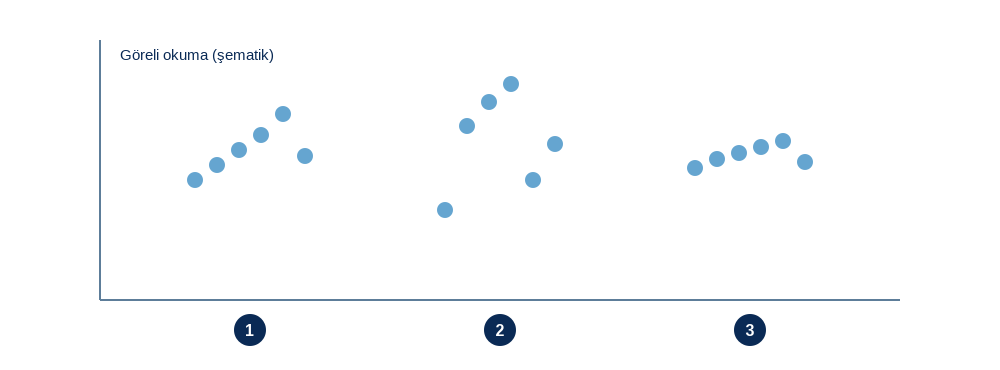
The distribution of readings from three different instruments at the same points was examined. Figure 1 shows the difference between instruments and the repeatability limit within each instrument.
4. Findings#
| Source of limit | Effect on reading | Mitigation |
|---|---|---|
| Instrument type and scale | Different values on different instruments | Compare within the same instrument |
| Calibration | Systematic bias | Calibration record and control measurement |
| Surface roughness | Scatter in contact and reading | Standard surface preparation |
| Hull temperature | Shifts the reading | Record the temperature |
| Single unrepeated measurement | Misleading single reading | Multiple measurements and averaging |
5. Discussion#
The findings show that the value of a moisture meter depends on recording its limits of uncertainty. A reading whose limits are unknown neither contributes to diagnosis nor avoids creating false confidence.
6. Conclusion#
Surface moisture meters are a valuable screening tool in osmosis detection, but must be used with their limits known, repeatedly and comparatively. This approach reduces erroneous decisions arising from misleading readings.
Was this guide helpful?
Thank you! Your feedback has been saved.
Guide content is for general information; in practice, the current technical data sheet of the product applies.
Keep reading
Related guides
Salt Residue and Dulling of the Hull: Causes, Cleaning and Prevention
Salt residue holds moisture and minerals against the surface and speeds UV and abrasion damage. We explain what white marks are, how to clean them and how to prevent them.
7 min read Hull RepairBoat Washing Routine: How, How Often and in What Order
Regular, correct washing is the cheapest way to protect gelcoat and paint. Cut scratch and stain risk with a pre-rinse, two buckets, the right soap and drying.
8 min read Hull RepairNano Coating and Boat Protection: What It Promises and How to Judge It
Nano coating products promise hard, water-repellent, long-lasting protection for a boat. Most claims are maker claims; sources say preparation and upkeep decide the result.
8 min read