
Refit and Maintenance
Sailing Yacht Refit: Mast, Rigging and Sail Hardware
What keeps a sailing yacht upright is the strength of the mast and rigging. The sails carry the wind, and the hardware transfers that load into the hull. A sailing yacht refit checks each link of this load chain separately.
Short answer
A sailing yacht refit covers checking the mast, the standing rigging and the sail hardware for fatigue and corrosion, renewing them where needed and rebuilding the load connections. Each part is recorded together with the load it carries and its age.
Key points
- Mast and rigging must carry wind loads safely into the hull.
- Wear and corrosion in sail hardware weaken the load chain.
- Load connection points and deck fittings are checked for fatigue.
- Hardware records are kept together with replacement dates.
The load chain on a sailing yacht#
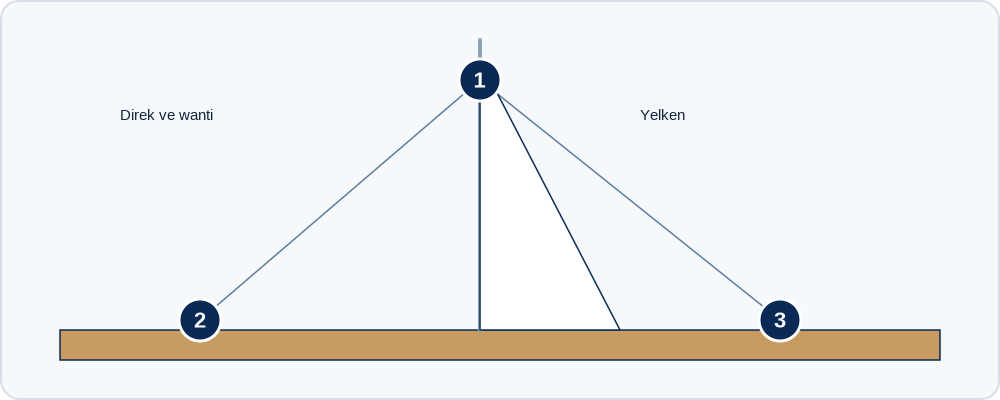
On a sailing yacht the force of the wind travels through the sail to the mast, then to the rigging and into the hull. In this chain each link passes the load it carries on to the next. A weak link under load endangers the whole system. For this reason every link of the chain is assessed separately in a refit.
Mast and connection points#
The mast is the tallest and most heavily loaded part of the yacht. Aluminium or carbon masts are examined carefully for fatigue cracks. The mast is attached to the hull through the step on the deck and the mast foot. These connection points are where the load spreads best into the hull, so they are checked for cracks or looseness.
| Part | Check | Outcome |
|---|---|---|
| Mast tube | Fatigue cracks, scratches, deformation | Repair or replacement |
| Mast foot | Connection, looseness, corrosion | Tightening or renewal |
| Wire rigging | Broken strands, rust, tension | Replacement |
| Terminals and pins | Wear, cracks | Replacement |
Standing rigging and terminals#
Wire rigging holds the mast from the sides and from forward. The wire is made of steel or another durable material. Rust and broken strands inside the wire create a weakness that cannot be seen. Rigging terminals are where the wire is attached; the pins and connections here wear under load. The rigging is measured for tension and renewed where needed.
Sail hardware#
Sail hardware covers the blocks, shackles, lines and tracks that set the direction and tension of the sail. These parts work under constant friction and wear. Lines are checked for chafe at their ends and for cracks in the sheath. The movement of blocks and shackles is checked so that it does not hinder adjustment.
Spreaders, chainplates and deck connections#
Spreaders are the arms that project from the sides of the mast and hold the shrouds away from it, giving them a wider angle so they support the mast more effectively. Spreaders carry compression; their roots at the mast are checked for cracks and corrosion, and the shroud fittings at their tips for wear. The chainplates that tie the shrouds to the hull are inspected for fatigue cracks and for leaks where they pass through the deck. At deck connections, the seal is checked to prevent water entering. Every piece of hardware bolted to the deck is refitted with sealant.
Records and replacement schedule#
Material information, date of fitting and replacement interval are recorded for the mast, rigging, lines and hardware. The age of parts carrying load should be known for safety.
Deciding to unstep the mast#
To inspect the mast and standing rigging fully, the mast is often unstepped. With the mast in place, the upper fittings, spreader roots and masthead hardware can only be seen by climbing, and close inspection is difficult. Once down, the mast is examined end to end on trestles; fittings are removed, sockets cleaned and non-destructive testing applied where needed.
With the mast down, the cables inside it are also overhauled. Navigation light, deck light, wind instrument and VHF antenna cables chafe inside the mast and wear over time. They are renewed while the mast is ashore and secured so they do not slap. The cable connection at the mast foot is arranged so water cannot enter.
Age of the standing rigging#
Wire and terminals fatigue with age even when no damage is visible. Many insurers and rigging makers use the age of the wire as a criterion for replacement, so the date it was fitted must be known. If the date is unknown or the rig has been used hard, replacement is considered whatever the inspection shows. The boat's insurance terms may also be binding on this point.
Running rigging#
The lines, blocks and winches that hoist, lower and trim the sails make up the running rigging. Lines wear where they run over sheaves and through clutches, and these points are checked along the length of each line. Winches are stripped, cleaned, their gears and pawls checked and greased with suitable grease. Block bearings and pins are inspected for wear and corrosion.
The keel and keel bolts#
On a sailing boat the load chain does not end at the mast; the keel's attachment to the hull is part of it. Keel bolts are checked for corrosion and tightness. Fine cracks along the hull-to-keel joint can be a sign of movement in the joint; in that case bolt tension and the floors inside the hull are examined. Where needed, the keel is dropped and the joint resealed.
Tuning the rig#
After the mast is restepped, the rig is tuned. Shroud tensions are set so the mast stands straight and upright, balanced side to side, measured with a suitable gauge and recorded. After the first sail, the rig is checked again because wire can settle and slacken, and tuning is repeated if needed.
Is unstepping the mast needed in every refit?
No. But if the standing rigging is to be fully inspected or replaced, unstepping is the most reliable route.
Repair the sails or buy new?
Stitching and reinforcement problems can be repaired. A sail that has lost its shape and whose cloth is worn may be better replaced.
Conclusion#
A sailing yacht refit verifies each link of the chain that carries the wind's force safely into the hull. When mast, rigging, spreaders, chainplates and sail hardware are all sound together, the yacht remains safe and efficient under sail. The next article covers quality control in refit work: how measurement, records and inspection processes are set up.
Was this guide helpful?
Thank you! Your feedback has been saved.
Guide content is for general information; in practice, the current technical data sheet of the product applies.
Keep reading
Related guides
Steel Hull Refit: Thickness Gauging, Plate Renewal and Corrosion Protection
How is plate thickness measured on a steel boat, when is plate renewed and how is corrosion prevented? Principles of gauging, welding and coating.
7 min read Refit and MaintenanceAluminium Hull Refit: Galvanic Corrosion and Compatible Coating Systems
Why an aluminium boat corrodes differently, how galvanic corrosion is prevented and which coating system is compatible. Insulation and paint selection.
6 min read Refit and MaintenanceFilling and Fairing: Rebuilding the Hull Form
How is a hull surface corrected with filler and fairing compound? Filler selection, straightedge checks and coat thickness principles.
6 min read