
Hull Repair
Factors Influencing Osmosis Formation in Fibreglass Hulls
This study examines which factors are associated with osmosis in GRP yacht hulls. It argues that osmosis cannot be attributed to a single cause, and that interacting manufacturing and operating factors must be assessed together.
Short answer
Osmosis arises from the combined effect of factors such as resin and manufacturing quality, gelcoat thickness, duration of water exposure and water type. Because these factors can reinforce one another, explanations reduced to a single factor remain incomplete.
Key points
- Osmosis arises from interacting factors, not a single cause.
- Manufacturing quality and resin choice determine initial susceptibility.
- Duration and type of water exposure accelerate development over time.
- Factor analysis forms the basis of a post-repair prevention plan.
Abstract#
This study examines the factors influencing osmosis formation in glass-reinforced yacht hulls. It argues that osmosis cannot be attributed to a single cause, and that manufacturing quality, resin selection, gelcoat thickness, water exposure and operating conditions act together. The results indicate that a prevention plan must cover all these factors.
Keywords: osmosis formation, fibreglass hull, resin quality, gelcoat thickness, water exposure.
1. Introduction#
Osmosis is among the most debated forms of degradation in fibreglass hulls. Yet even among identical models of the same age in the same water, some hulls show osmosis while others do not. The question here is which factors account for this difference.
2. Theoretical framework#
The basic condition for osmosis is the entry of water into the laminate and its contact with soluble components. This condition is governed by manufacturing properties such as the water permeability of the resin, the void content of the laminate, gelcoat thickness and degree of cure. The duration and type of water exposure affect the rate of development.
3. Method#
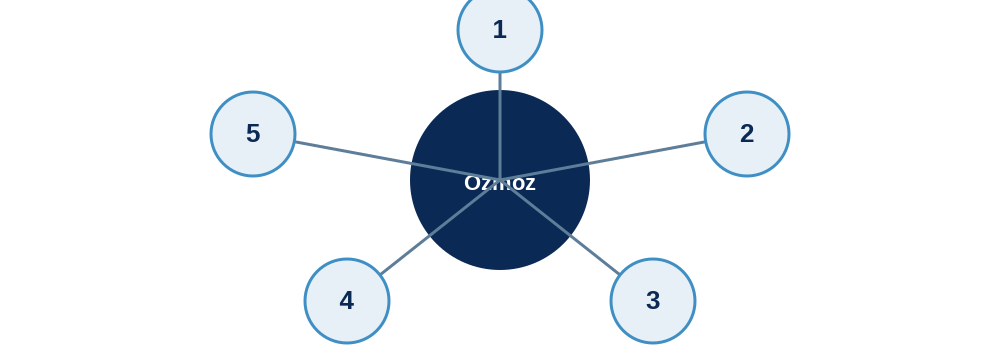
Factors were examined under the headings of manufacturing, materials, environment and use. Figure 1 shows the combined effect of these factors as a central structure.
4. Findings#
| Factor | Mechanism | Observational evidence |
|---|---|---|
| Resin and cure | Increases water permeability and soluble residues | Incomplete hardening, surface softness |
| Gelcoat thickness | Weakens the water barrier | More blisters in thin gelcoat areas |
| Laminate void content | Accelerates water diffusion | Porous structure in section |
| Duration of water exposure | Accelerates development over time | Concentration in long-immersed areas |
| Manufacturing quality | Determines initial susceptibility | Inconsistent layers, trapped air |
5. Discussion#
The findings show that osmosis is a multifactorial process. Explanations focusing solely on water exposure duration or solely on resin choice are therefore incomplete. A repair and prevention plan should cover all factors from manufacture through use.
6. Conclusion#
In fibreglass hulls, osmosis develops through the combined effect of manufacturing, material, environmental and use factors. Understanding these factors strengthens both diagnosis and post-repair prevention.
Was this guide helpful?
Thank you! Your feedback has been saved.
Guide content is for general information; in practice, the current technical data sheet of the product applies.
Keep reading
Related guides
Salt Residue and Dulling of the Hull: Causes, Cleaning and Prevention
Salt residue holds moisture and minerals against the surface and speeds UV and abrasion damage. We explain what white marks are, how to clean them and how to prevent them.
7 min read Hull RepairBoat Washing Routine: How, How Often and in What Order
Regular, correct washing is the cheapest way to protect gelcoat and paint. Cut scratch and stain risk with a pre-rinse, two buckets, the right soap and drying.
8 min read Hull RepairNano Coating and Boat Protection: What It Promises and How to Judge It
Nano coating products promise hard, water-repellent, long-lasting protection for a boat. Most claims are maker claims; sources say preparation and upkeep decide the result.
8 min read