
Hull Repair
Opening Blisters and Sample Examination in a Suspected Osmosis Case
This study addresses the controlled opening of blisters on a yacht hull with suspected osmosis, and the examination of their contents as samples. It argues that opening should be planned so that the integrity of the findings is preserved.
Short answer
Blisters should be opened only at a few selected points, under record and in a controlled way. The content sample is assessed for acidity and chemical content; the opening must be carried out without damaging the rest of the hull.
Key points
- Only a few representative blisters should be opened, not all.
- The opening should be documented with photographs and location records.
- A content sample is taken for acidity and chemical assessment.
- Opened points must be properly closed during repair.
Abstract#
This study examines the controlled opening of blisters and the assessment of blister content on yacht hulls with suspected osmosis. The acidity of blister content is among the most direct evidence supporting osmosis. It is argued, however, that opening must be carried out on record and without adding damage to the hull.
Keywords: blister opening, sample examination, osmosis, pH measurement, controlled opening.
1. Introduction#
Examining blister contents is one of the few methods that yields information beyond external appearance. A poorly executed opening, however, can cause new damage to the hull and make later inspection harder. The question here is how opening and sampling should be planned.
2. Theoretical framework#
Inside an osmotic blister there is an acidic liquid formed by soluble components. The acidity of this liquid carries the trace of the osmosis mechanism. Likewise, its chemical content may indicate which components are associated with the osmosis.
3. Method#
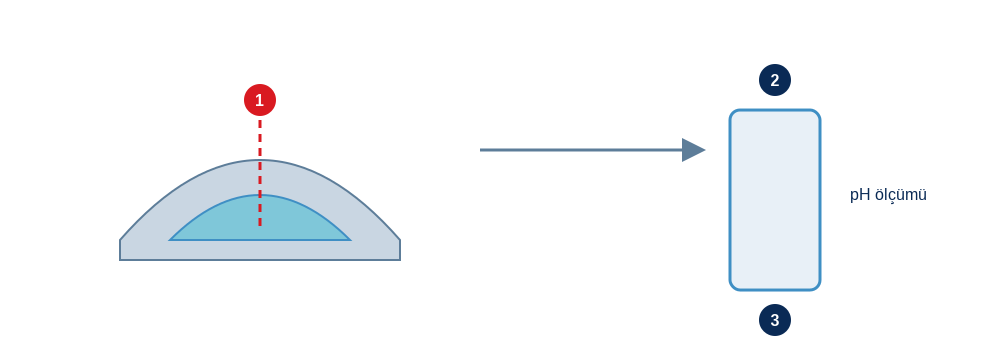
Opening was carried out on selected blisters in four steps: location record, controlled cut, sampling of content and acidity measurement. Figure 1 schematically shows the opening and sampling steps.
4. Findings#
| Record | Purpose | Method |
|---|---|---|
| Location and count | Locating the blister on the hull | Map and photograph |
| Cut size | Limiting damage to the hull | Measured, small cut |
| Content acidity | Supporting the likelihood of osmosis | pH measurement |
| Closing method | Preparing subsequent repair | Written record and photograph |
5. Discussion#
The findings show that the value of an opening depends on the quality of its record. An opening without a record neither contributes to diagnosis nor avoids unnecessary damage to the hull.
6. Conclusion#
Opening blisters and examining samples is an important step supporting an osmosis diagnosis. It gains meaning only when carried out at a few representative points, on record and without damaging the hull.
Was this guide helpful?
Thank you! Your feedback has been saved.
Guide content is for general information; in practice, the current technical data sheet of the product applies.
Keep reading
Related guides
Salt Residue and Dulling of the Hull: Causes, Cleaning and Prevention
Salt residue holds moisture and minerals against the surface and speeds UV and abrasion damage. We explain what white marks are, how to clean them and how to prevent them.
7 min read Hull RepairBoat Washing Routine: How, How Often and in What Order
Regular, correct washing is the cheapest way to protect gelcoat and paint. Cut scratch and stain risk with a pre-rinse, two buckets, the right soap and drying.
8 min read Hull RepairNano Coating and Boat Protection: What It Promises and How to Judge It
Nano coating products promise hard, water-repellent, long-lasting protection for a boat. Most claims are maker claims; sources say preparation and upkeep decide the result.
8 min read