
Underwater
International Ultra 300 and Ultra 2 Hard Antifouling: Which Boat Is It For?
Antifouling choice often starts with the question "which product is best", but the right question is "which boat, which water, which use". International's Ultra 300 and Ultra 2, named as its predecessor, are examples of the hard antifouling family. This article explains the hard matrix logic, the suitability conditions the maker describes and the limits of those accounts in general terms; it recommends no product, number of coats or time. The current data sheet and technical service remain the authority.
Short answer
Hard antifouling is described as a type that carries its biocide in a hard, wear-resistant matrix, can be scrubbed and burnished, and aims to keep the surface smooth. According to the maker, Ultra 300 is the top product of this family; it is intended for fast powerboats and streamlined yachts, can be scrubbed, and is said to keep its protection after haul-out. Retailers write that Ultra 300 replaces Interspeed Ultra 2. There are limits on aluminium, galvanised surfaces and certain PTFE-containing systems, which must be verified on the current data sheet. This article is general information, not application advice.
Key points
- Hard antifouling rests on a wear-resistant matrix and a scrubbable, burnishable surface.
- The maker presents Ultra 300 for fast powerboats and streamlined boats, with a claim of up to a year of protection in severe fouling.
- Retailers write that Ultra 300 replaced Ultra 2; verify with the maker's documents.
- Compatibility with aluminium, galvanised surfaces and some special systems is limited; read it from the data sheet.
- It contains biocide; regional rules and professional-application conditions may vary.
1. What does hard antifouling mean?#
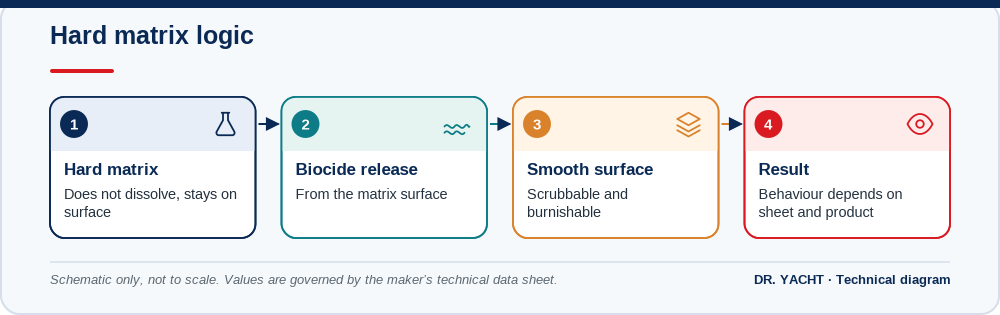
Antifouling products are usually described by their behaviour in service as hard, eroding and hybrid groups. In hard antifouling the biocide sits in a hard binder matrix that does not dissolve in water. The matrix relies on staying on the surface rather than wearing away over time, and biocide is released from the matrix surface. This logic is a general classification and does not work the same way in every product.
Makers usually present hard antifouling as a scrubbable and burnishable surface. On the maker's page for Ultra 300 the product is said to allow scrubbing and polishing and to give a smooth finish. That smoothness is associated with the idea of reducing friction, especially on fast boats. This is a maker account; the real effect depends on the boat and its use.
This article is not product advice. Its aim is to teach how to read the hard matrix logic, the suitability conditions the maker describes for Ultra 300 and Ultra 2, and the limits of those conditions. No number of coats, time, thinner or method is suggested, because the right values depend on product version, boat and environment.
2. Ultra 300: the maker's account#
According to the maker's product page, Ultra 300 is its ultimate hard antifouling, giving a year of protection and intended for powerboats or any streamlined yacht, even in the harshest fouling conditions. The same page says the product allows scrubbing and polishing, performs well in harsh environments and keeps its protection after hauling. These are maker claims and not independent test results.
The maker's technical data excerpt says the product is for below the waterline on the hull, is a hard type, can be used in sea, fresh and brackish water and covers glass fibre, lead, steel and wood as substrates. The line on suitability for aluminium propellers appears as "suitable" on some regional pages and as "not suitable" on others; the difference may come from regional versions and page updates. So the relevant line should be read from the current data sheet for your region.
Some regional pages say the product may be bought and applied only by professional applicators. This relates to local rules for biocide-containing products and varies from country to country. This article is not regulatory advice; the competent authority and the maker are the authority for local rules.
3. From Ultra 2 to Ultra 300: reading a product name change#
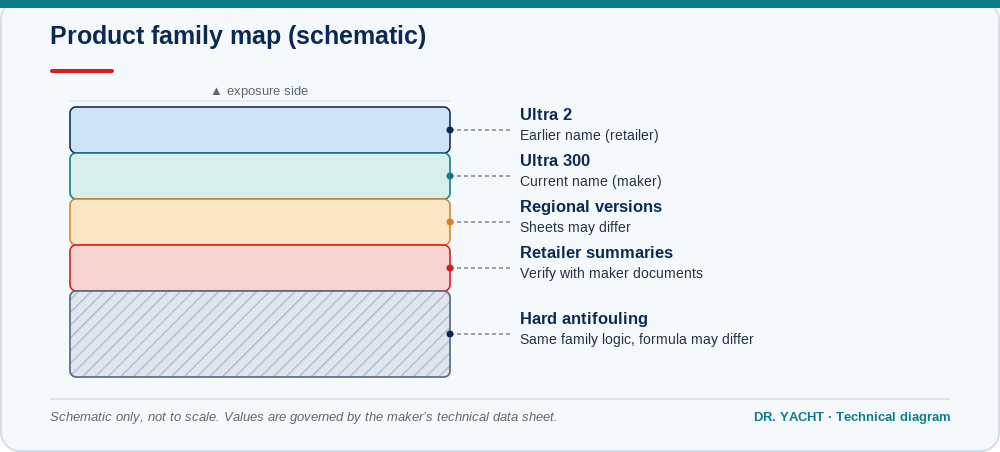
Retailer pages write that Ultra 300 replaces Interspeed Ultra 2 and offers easy cross-reference. Another maker-licensee page describes Ultra 2 as a hard, scrubbable antifouling for fast powerboats and mentions a technology called Biolux. Together these suggest product names changed over time while the family kept the same hard antifouling logic.
Even so, a name change does not mean the formula is the same. A product replaced by a newer one may differ in biocide system, binder, regulatory compliance or colour options. So the old product's data sheet should not be applied to the new product; look to the current document. Retailer notes help with cross-referencing but do not replace the maker's document.
Regional versions can differ too: under the same name there may be different formulas or registration status in different countries. So make sure that a data sheet found online applies to your country and your product.
| Array | Array | Array | Array |
|---|
4. Which boat? Suitability questions#
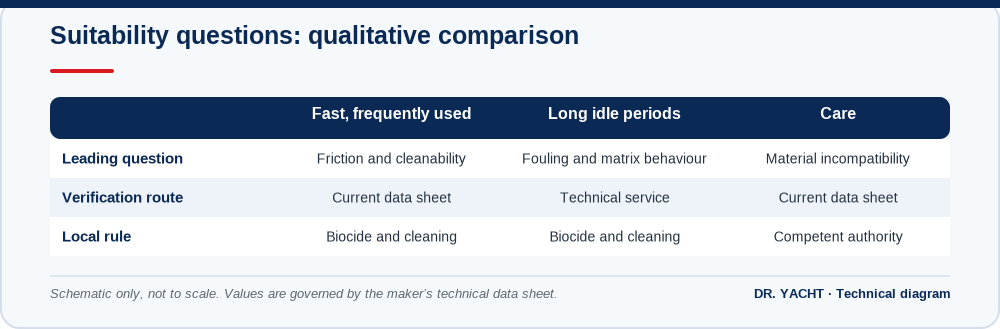
"Which boat" has no single answer; it splits into several questions: how fast and how often is the boat used, is the water warm and fouling heavy, how long does the boat stay still, what is the hull material and what is the existing coating? Maker accounts emphasise fast and streamlined boats, but that does not mean other boats cannot use it; it only shows which profile the product is positioned for.
For boats that stay still the limits of hard antifouling are asked about: hard-matrix products may behave differently in biocide release and surface cleanliness when there is no movement or water flow. That is a general topic of discussion and depends on the product; this article should not be read as a promise or a warning. The data sheet and technical service are the authority for the decision.
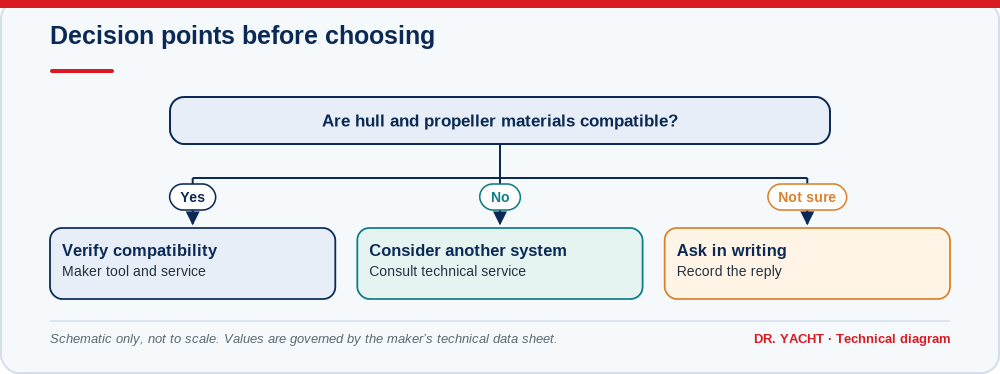
Hull material is decisive too. Incompatibility with aluminium, galvanised surfaces and certain PTFE or slippery systems appears in retailer and maker accounts; one retailer page says it is not suitable for aluminium and galvanised surfaces or for use with some PTFE-containing antifoulings. So knowing the existing coating and verifying compatibility with the maker is important.
5. Scrubbing, burnishing and surface care#
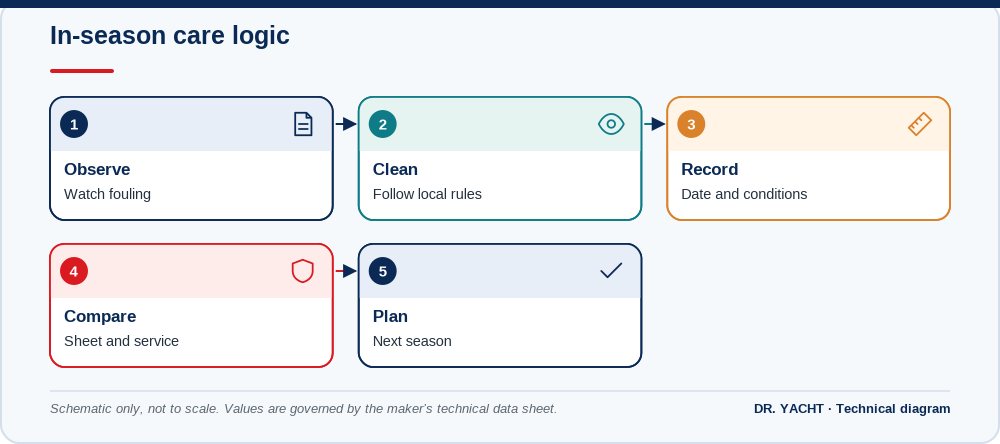
The outstanding feature of hard antifouling is scrubbability: the maker says that scrubbing and polishing can give a smooth surface for Ultra 300. The general logic is that during the season the surface can be lightly cleaned and smoothed, which may help keep the surface protected at the early stage of fouling. How much, how often and how scrubbing is done depends on product, fouling and local rules.
Local rules matter too: in some harbours and regions in-water hull cleaning is restricted or made subject to special conditions, because paint particles containing biocide can enter the water. This article gives no rule summary; consulting the local harbour and competent authority is general good practice. Methods of underwater cleaning are the subject of a separate article.
Burnishing and sanding reduce dry film thickness, so there is a limit to protection time and layer integrity. How much is acceptable depends on the product and the film applied and must be read from the data sheet. This article suggests no limit.
A small scenario: two boats, two different questions#
The first boat is a fast powerboat, used often, in warm water. The questions here are about speed and cleanability, and maker accounts place a hard, scrubbable product close to this profile; but the current data sheet and technical service are the authority for the decision. The second boat is a sailing yacht that sits at its berth for most of the year. The questions here are about idle time, fouling and hull material, and how a hard matrix behaves in this use should be discussed with the maker and technical service.
Neither scenario recommends a product, because the right choice depends on use profile, water, hull and local rules. If there is uncertainty, it is general good practice to ask in writing and keep the reply on record.
6. Common misreadings#
The first misreading is to read "hard" as "most durable" or "best for every boat". The second is to take a maker claim (for example a year of protection) as a guarantee; the claim carries qualifiers such as "when applied correctly" and "in severe conditions". The third is to assume a name change means the same formula.
The fourth is to neglect incompatibility with aluminium and galvanised surfaces. The fifth is to ignore regional restrictions and professional-application conditions. The sixth is to put a retailer summary in place of the maker's data sheet. The seventh is to neglect safety: antifouling can be very toxic to aquatic organisms; gloves, breathing protection and waste handling are general good practice.
| Array | Array | Array | Array |
|---|
7. Biocide, environment and records#
Antifouling contains biocide, which can be toxic to aquatic organisms. One retailer page states that the product is very toxic to aquatic life with long-lasting effects and says to prevent it reaching water. So application, cleaning and waste handling matter for both safety and the environment. This article gives no waste procedure; local rules and the label are the authority.
Finally, a short record after application is useful: which product, which version, which colour, which conditions and on what date? Such a record makes it easier to answer compatibility questions next season and to correspond with the maker. Read it as general good practice, not an obligation.
Frequently asked questions#
What is hard antifouling?
It is an antifouling type that carries its biocide in a hard, wear-resistant matrix and can usually be scrubbed and burnished. Matrix behaviour varies by product; check the current data sheet.
Which boats is Ultra 300 described for?
According to the maker, fast powerboats and streamlined yachts in severe fouling conditions. That is a maker account; for your own boat's use the current data sheet and technical service are the authority.
Are Ultra 300 and Ultra 2 the same?
Retailers write that Ultra 300 replaces Interspeed Ultra 2. That is a retailer account that helps with cross-referencing; product names, formulas and regional versions may differ.
Can it be used on aluminium?
Retailer and maker tables say it is not suitable for aluminium propellers. For aluminium hulls or galvanised surfaces the current data sheet and technical service are the authority.
Is this article an application instruction?
No. It recommends no product, number of coats, time or method. The current data sheet, local rules and technical service are the authority.
Was this guide helpful?
Thank you! Your feedback has been saved.
Guide content is for general information; in practice, the current technical data sheet of the product applies.
Keep reading
Related guides
How to Read the Awlgrip Topcoat Technical Data Sheet: Solids, Dry Film, Cure Time
A data sheet is not a recipe card; it is a reference written for specific conditions. This article explains how to read the solids, dry film, wet film, coverage and cure lines, and where their limits lie.
13 min read Paint and CoatingsWet Edge and Speed in the Roll-and-Tip Method: The Logic Behind a Professional Finish
In roll-and-tip the result is often decided less by the product than by keeping the wet edge. This article explains how the edge line forms, what speed and division of work change, and where sources disagree.
13 min read Paint and CoatingsAwlgrip in Hot Weather: Fast Drying, Dry Spray and Choosing a Reducer
As temperature rises, solvent leaves quickly, paint pulls fast and the wet edge shortens. This article explains the logic of hot-weather problems, the reducer families the maker separates by temperature band, and their limits.
11 min read