
Hull Repair
Planning Hull Drying After Osmosis Repair
This study examines how the drying of a hull after osmosis repair should be planned. It argues that drying is a process tracked by measurement and tied to an end criterion, not a fixed period of time.
Short answer
Drying should consist of measurement-tracked stages: a baseline measurement, regular intermediate checks and a recorded end criterion. The drying period should end not by calendar, but by measurement confirming the fall in hull moisture.
Key points
- Drying is a measurement-tracked process, not a calendar-based one.
- A baseline measurement and regular intermediate checks should be planned.
- The end should be tied to a recorded moisture criterion.
- Drying records form the basis for later repair and follow-up.
Abstract#
This study examines how the drying of a hull after osmosis repair should be planned. It argues that drying should be based not on a fixed period but on a measured decline in moisture and a recorded end criterion. The approach proposed consists of a baseline measurement, regular intermediate checks and a verified end point.
Keywords: drying plan, post-osmosis, hull drying, moisture monitoring, end criterion.
1. Introduction#
The durability of an osmosis repair depends on how well the hull was dried before and after the repair. A repair applied to a damp hull may deteriorate over time as trapped water acts. The question here is how drying should be planned and when it can be considered complete.
2. Theoretical framework#
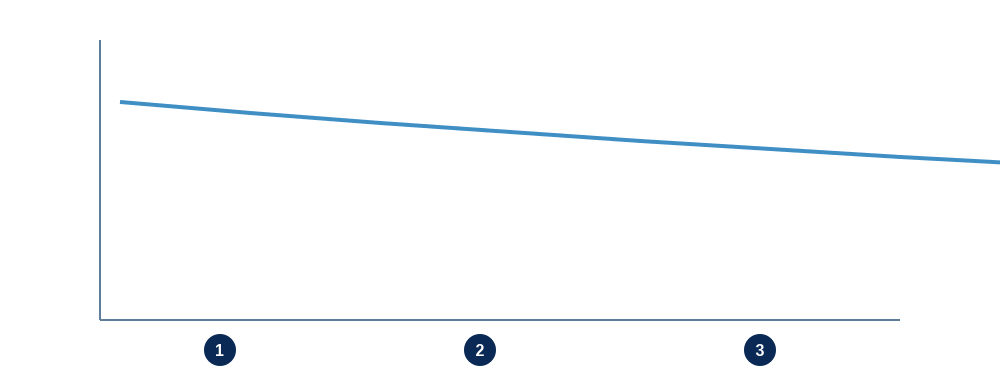
Drying occurs as moisture moves outward through the laminate. This movement is fast at first and then slows, so the moisture decline curve is typically steep at the beginning and flattens later. A fixed period is therefore less reliable than monitoring the flattening of the curve.
3. Method#
The drying process was monitored in three stages: baseline, intermediate checks and end verification. Figure 1 shows the stages of the moisture decline curve schematically.
4. Findings#
| Stage | Measurement | Decision |
|---|---|---|
| Baseline | Baseline moisture values by zone | Setting the drying plan and measurement points |
| Rapid decline | Regular measurements at the same points | Confirming that decline continues |
| Slowing decline | Intermediate checks and curve tracking | Verification once flattening begins |
| End | Final measurement against recorded criterion | Starting repair and coating |
5. Discussion#
The findings show that drying based on a fixed period cannot account for differences between vessels and climates. Drying tracked by measurement and tied to a recorded end criterion is, by contrast, both repeatable and auditable.
6. Conclusion#
Drying after osmosis is a staged, measurement-tracked and recorded process. A baseline measurement, regular checks and a verified end criterion secure the durability of the repair.
Was this guide helpful?
Thank you! Your feedback has been saved.
Guide content is for general information; in practice, the current technical data sheet of the product applies.
Keep reading
Related guides
Salt Residue and Dulling of the Hull: Causes, Cleaning and Prevention
Salt residue holds moisture and minerals against the surface and speeds UV and abrasion damage. We explain what white marks are, how to clean them and how to prevent them.
7 min read Hull RepairBoat Washing Routine: How, How Often and in What Order
Regular, correct washing is the cheapest way to protect gelcoat and paint. Cut scratch and stain risk with a pre-rinse, two buckets, the right soap and drying.
8 min read Hull RepairNano Coating and Boat Protection: What It Promises and How to Judge It
Nano coating products promise hard, water-repellent, long-lasting protection for a boat. Most claims are maker claims; sources say preparation and upkeep decide the result.
8 min read